
Key Takeaways
- Third-party certifications (USDA Organic, MADE SAFE, EWG Verified) matter more than unregulated "natural" claims
- All 11 brands meet verified organic standards, with transparent ingredient sourcing and sustainable packaging
- Certified organic formulas rely on plant-based actives, specialty emulsifiers, and natural UV filters to perform at commercial scale
- Greenwashing litigation is rising — certified brands carry significantly lower risk for consumers and retailers alike
What Makes a Personal Care Brand Truly Organic?
In personal care, "organic" lacks unified regulation. Unlike food, the FDA does not define "organic," "natural," or "clean" for cosmetics. USDA Organic certification requires at least 95% organic agricultural ingredients, but many brands use unregulated terms to create a false health halo.
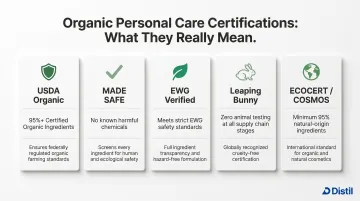
Key certifications to verify:
| Certification | Standard | What It Ensures |
|---|---|---|
| USDA Organic | 95%+ organic agricultural ingredients | Ingredient sourcing verified by USDA National Organic Program |
| MADE SAFE | Screens against 15,000+ toxic substances | No carcinogens, endocrine disruptors, or heavy metals |
| EWG Verified | Free from ~3,600 harmful ingredients | Independent safety review by Environmental Working Group |
| Leaping Bunny | No animal testing | Cruelty-free across products and ingredients |
| ECOCERT/COSMOS | 95% natural origin minimum | International organic and natural cosmetics standard |
Beyond certifications, genuinely organic formulations rely on plant-based oils (argan, jojoba, rosehip), botanical extracts, fermentation-derived hyaluronic acid, and natural emulsifiers. Ingredients to avoid include:
- Parabens and phthalates
- Sulfates (SLS/SLES)
- Synthetic fragrances
- Formaldehyde releasers
- Petrochemical emollients and derivatives
11 Best Organic Personal Care Brands for 2026
These brands earned selection based on verified certifications, documented ingredient transparency, packaging sustainability, and proven consumer trust.
Dr. Bronner's
Founded in 1948, Dr. Bronner's is the top-selling natural soap in the US, offering a full line of USDA Organic and Fair Trade certified products — from castile soaps to body lotions and toothpaste.
The brand's "All-One" philosophy ensures every product is multi-use, packaged in 100% post-consumer recycled (PCR) plastic, and formulated without GMOs or synthetic additives. In 2024, 84% of all plastic packaging used PCR material.
| Best For | Multi-use personal care across body, hair, and oral hygiene |
|---|---|
| Key Certifications | USDA Organic, Fair Trade, Leaping Bunny, Non-GMO, EWG Verified |
| Sustainability Highlights | 100% PCR plastic bottles, regenerative organic ingredient sourcing |
OSEA Malibu
Founded in 1996, OSEA Malibu built its skincare line around seaweed-based formulas, hand-harvesting sustainably sourced Undaria seaweed from Patagonia. Rich in minerals and amino acids, this single ingredient drives the brand's cleansers, serums, body oils, and bath products.
OSEA became the first Ocean Responsible verified beauty brand in 2022 through its partnership with SeaTrees, funding coastal restoration projects in Cambodia and Kenya. All products are Leaping Bunny certified and packaged in recyclable glass.
| Best For | Seaweed-infused face and body skincare for all skin types |
|---|---|
| Key Certifications | Leaping Bunny, Ocean Responsible, PETA Vegan |
| Sustainability Highlights | Recyclable glass packaging, coastal carbon offset projects, PEG-free formulas |
True Botanicals
This woman-owned brand holds MADE SAFE certification, screening formulas against 15,000+ toxic substances including carcinogens, heavy metals, and endocrine disruptors — one of the most comprehensive screening protocols available in consumer personal care.
True Botanicals formulates with wildcrafted ingredients like chebula (Ayurvedic fruit), algae extract, and plant stem cells. The brand is Certified B Corp, plastic-negative through rePurpose Global, and uses 100% FSC-certified paper packaging.
| Best For | Anti-aging and skin-restorative serums and oils |
|---|---|
| Key Certifications | MADE SAFE, Leaping Bunny, B Corp, Plastic Negative |
| Sustainability Highlights | FSC-certified packaging, wildcrafted botanicals, vegan formulations |
Herbivore Botanicals
Founded by a Seattle husband-and-wife team in 2011, Herbivore Botanicals uses 100% natural, certified organic ingredients with zero synthetic additives — every ingredient serves a functional purpose, with no fillers.
The brand's best-selling Lapis Blue Tansy Face Oil combines responsibly sourced olive squalane and botanical oils. All products are cruelty-free, vegan, and packaged in recyclable glass.
| Best For | Raw, ingredient-led skincare for acne-prone and sensitive skin |
|---|---|
| Key Certifications | Leaping Bunny, vegan certified |
| Sustainability Highlights | Recyclable glass packaging, no synthetic ingredients |
Cocokind
This BIPOC-owned, woman-founded brand offers budget-friendly certified organic skincare with full-label transparency — each product label includes carbon footprint, recyclability percentage, and percentage of organic ingredients.
Cocokind's "Sustainability Facts" panel, modeled after FDA Nutrition Facts, breaks down environmental impact at the product level. Available at Target, with prices from ~$15, the brand proves organic formulas can be accessible.
| Best For | Budget-friendly organic skincare with maximum ingredient transparency |
|---|---|
| Key Certifications | Certified organic ingredients, cruelty-free, vegan |
| Sustainability Highlights | Per-product sustainability labeling, recyclable packaging |
Ursa Major
This Vermont-based Certified B Corp makes gender-inclusive, plant-powered skincare free from petrochemicals, synthetic fragrances, and sulfates. The brand formulates with sea fennel, shea butter, and sustainably certified palm oil.
Ursa Major is certified plastic-negative through rePurpose Global, funding removal of twice the plastic it uses. All packaging is fully recyclable, and the brand operates with carbon-reduction commitments.
| Best For | Gender-inclusive, plant-powered face care for all skin types |
|---|---|
| Key Certifications | Certified B Corp, Plastic Negative, cruelty-free, vegan |
| Sustainability Highlights | Recyclable packaging, no petrochemicals or synthetic fragrances |
Activist Skincare
Activist Skincare was among the first fully refillable skincare brands and formulates without synthetic colors, fragrances, or over 1,000 listed toxins. The brand is a 1% for the Planet member.
Its refillable pouch system generates 99% less CO2 emissions and 75% less plastic waste than recycled glass, while costing consumers less. Used pouches are recyclable through TerraCycle.
| Best For | Refillable, high-performance botanical skincare for sensitive skin |
|---|---|
| Key Certifications | 1% for the Planet, TerraCycle partnership |
| Sustainability Highlights | 100% refillable pouch system, reduced single-use plastic |
Meow Meow Tweet
This queer-owned, small-batch vegan apothecary introduced one of the first compostable deodorant tube, made from biodegradable paper and vegetable inks. All products use certified organic, non-GMO ingredients supporting regenerative farming.
The brand operates a 100% zero-waste closed-loop system, allowing customers to buy refills in bulk and eliminating packaging waste for repeat purchases. All formulas are palm oil-free.
| Best For | Zero-waste body, hair, and skin care for eco-conscious routines |
|---|---|
| Key Certifications | Cruelty-free, certified organic ingredients, palm oil-free, non-GMO |
| Sustainability Highlights | Compostable packaging, closed-loop bulk refill system |
Attitude (Oceanly Line)
This Canadian brand's Oceanly line is EWG Verified, formulated with 92.9% natural origin ingredients in solid, plastic-free formats. Products last approximately six months per bar.
The star ingredient, phytoglycogen (derived from non-GMO sweet corn), has been shown in studies to reduce fine lines, wrinkles, and age spots. Attitude plants one tree per product sold through Eden Reforestation Projects and One Tree Planted — over 2 million trees since 2020.
| Best For | Solid, plastic-free skincare for travel and zero-waste lifestyles |
|---|---|
| Key Certifications | EWG Verified, vegan, cruelty-free, FSC-certified packaging |
| Sustainability Highlights | Plastic-free solid formulas, biodegradable formulations, tree planting program |
100% Pure
An American-made brand offering a full personal care line spanning skincare, haircare, and cosmetics, 100% Pure uses certified organic ingredients and pigments derived entirely from fruit, vegetables, and tea — eliminating synthetic dyes.
Waterless and concentrated cleansers reduce environmental impact, and all packaging is recyclable. The brand partners with Trees for the Future, planting hundreds of thousands of trees.
| Best For | Full-range organic personal care including cosmetics and haircare |
|---|---|
| Key Certifications | Certified organic, vegan, cruelty-free |
| Sustainability Highlights | Recyclable packaging, fruit-pigmented cosmetics, tree planting program |
One Love Organics
This woman-owned, Georgia-based brand is certified by ECOCERT, an international organic and natural cosmetics standard requiring 95% natural origin ingredients. One Love Organics crafts small-batch, filler-free skincare with 99%+ natural ingredients.
The brand's Skin Dew Coconut Water Cream features pro-ceramide conditioners and sea botanicals. All products are dermatologist-tested, cruelty-free, and packaged in recyclable materials.
| Best For | Rebalancing and barrier-supporting skincare for dry and combination skin |
|---|---|
| Key Certifications | ECOCERT certified, cruelty-free, PETA Beauty Without Bunnies |
| Sustainability Highlights | Small-batch crafting, recyclable packaging, no synthetic fillers |
How We Chose the Best Organic Personal Care Brands
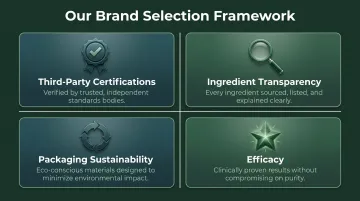
Selection criteria included:
- Third-party certifications: USDA Organic, MADE SAFE, EWG Verified, Leaping Bunny, ECOCERT, B Corp
- Ingredient transparency: Avoidance of parabens, sulfates, synthetic fragrances, petrochemicals
- Packaging sustainability: Refillable, recyclable, compostable, or zero-waste
- Efficacy: Demonstrated performance across skin and hair types
One common mistake: assuming "natural" or "plant-based" on a label equals certified organic or toxin-screened. These terms are unregulated — third-party certification is the only reliable proxy.
Sourcing integrity matters as much as final formulation. Brands tracing botanicals to organic farms, supporting fair trade or regenerative agriculture, and working with suppliers who document sustainability practices deliver more consistent quality than those relying on commodity ingredient markets.
Specialty chemical partners play a direct role here. Distil, for example, works with personal care brands to source and formulate ingredients like sucrose cocoate, plant-based emollients, and natural UV filters — with verified traceability from raw material to finished batch.
Conclusion
Choosing an organic personal care brand in 2026 requires verifying certifications, understanding ingredient sourcing, and evaluating full lifecycle sustainability — not just trusting a "natural" label.
For personal care brand founders and product developers, raw material quality and formulation partners determine whether organic claims hold at commercial scale. Brands building or scaling an organic personal care line can work with Distil for:
- R&D-led formulation support with application-specific trials
- Sustainable ingredient sourcing, including RSPO-certified feedstocks and plant-based emulsifiers
- Asset-light manufacturing that scales without capital expenditure
Consumer scrutiny is increasing and regulatory frameworks are tightening. Brands that invest in verifiable, traceable organic chemistry now will be better equipped to meet both compliance thresholds and consumer expectations as 2026 standards take hold.
Frequently Asked Questions
What does "organic" actually mean on a personal care product label?
"Organic" in personal care is not universally regulated the way food is. USDA Organic requires 95%+ certified organic ingredients, while "natural" or "plant-based" are unregulated marketing terms. Third-party certifications like MADE SAFE, EWG Verified, and ECOCERT are more reliable indicators.
Are organic personal care products safe for sensitive skin?
Organic formulas tend to be gentler because they avoid synthetic fragrances, parabens, and sulfates that commonly trigger irritation. However, natural doesn't automatically mean hypoallergenic — individuals with plant-based allergies should patch-test any new product.
What certifications should I look for when buying organic personal care?
Key certifications include USDA Organic (ingredient sourcing), MADE SAFE (toxin screening), EWG Verified (safety review), Leaping Bunny (cruelty-free), ECOCERT (international organic standard), and Certified B Corp (environmental and social performance).
What ingredients should I avoid in personal care products?
Avoid parabens (preservatives linked to hormone disruption), phthalates (plasticizers with reproductive risks), sulfates like SLS/SLES (harsh detergents), synthetic fragrances (allergens), formaldehyde releasers like DMDM hydantoin (carcinogens), and triclosan (antibacterial agent linked to hormonal effects).
Can organic personal care products perform as well as conventional ones?
Modern organic formulations using concentrated plant actives, fermentation-derived ingredients like hyaluronic acid, and high-quality botanical oils can match or outperform conventional formulas. For hydration, barrier repair, and anti-aging in particular, well-formulated organic products frequently deliver comparable — or better — results.
Is organic personal care more expensive than conventional products?
Premium organic brands do carry higher price tags, but brands like Cocokind and Attitude show that certified organic formulas can be budget-accessible. The value case also extends beyond cost: fewer harsh chemicals and more concentrated actives often mean you use less product per application.