
Choosing a supplier takes more than a catalogue review. Grade consistency, testing, documentation, scale-up capability and delivery reliability all affect production outcomes. IMARC estimates the Indian engineering plastics market at USD 9.40 billion for 2026.
This article defines engineering plastics, profiles five notable compounders and suppliers, and gives you a framework for comparing them.
Key Takeaways
- Engineering plastics are performance polymers or compounds built for demanding applications.
- Separate compounders from traders, sales offices and masterbatch-only players.
- Compare polymer range, testing, capacity, certifications and lead times.
- Verify current ranges, certificates and plant locations before requesting quotes.
Overview of Engineering Plastics in the Indian Market
What Counts as an Engineering Plastic
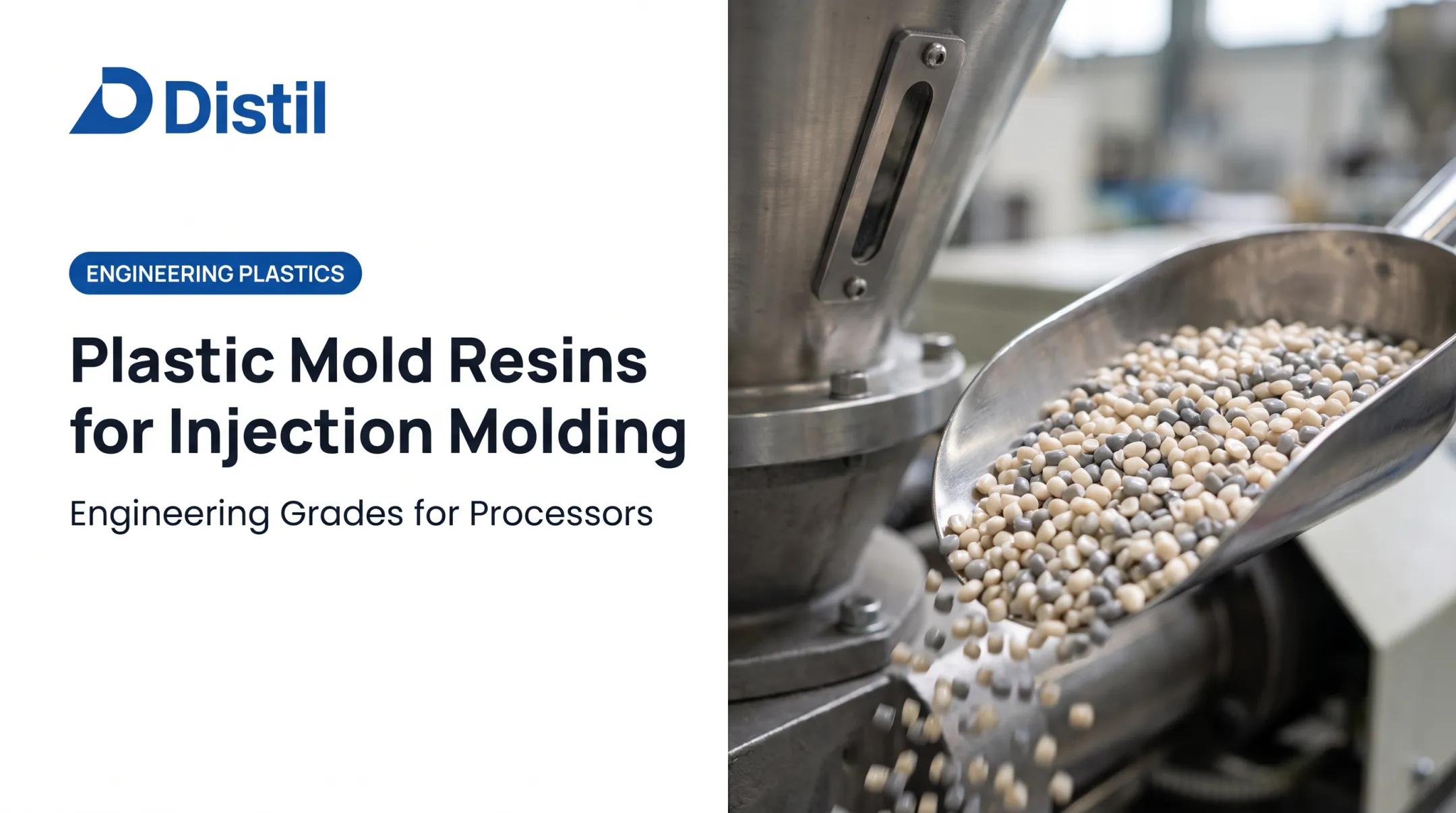
Engineering plastics are mostly thermoplastic polymers that deliver higher mechanical, thermal, chemical and dimensional performance than commodity plastics. Compounding takes this further. Base polymers are melt-blended with fillers, glass fibre, impact modifiers, flame retardants or other additives to reach a defined property target.
Common base polymers include PP, ABS, polyamide, polycarbonate and PBT.
Where They Are Used
Each sector pulls on a different property:
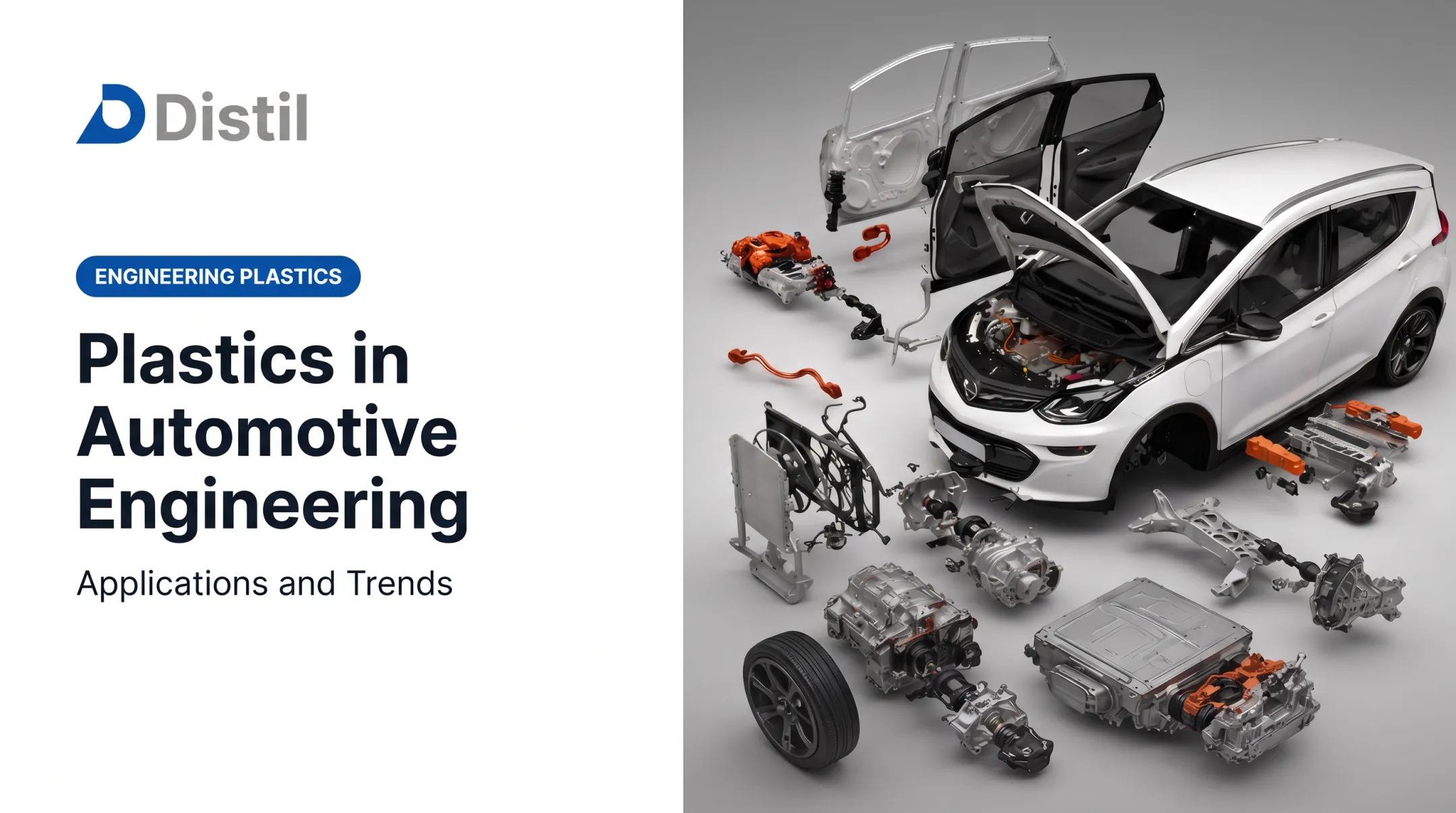
- Automotive: heat and chemical resistance for under-hood parts. SIAM reports about 34.7 million vehicles produced in FY2025-26.
- Electrical and electronics: flame retardancy and hydrolysis resistance for connectors and housings.
- Wire and cable: low-smoke, zero-halogen compounds driven by stricter fire-safety requirements.
- Healthcare: resistance to sterilisation and chemical exposure.
- Consumer products: impact strength and colour consistency.
- Precision parts: low moisture absorption.

Sector output is not the same as polymer demand, so treat these figures as context only.
The companies below are notable candidates, not a definitive ranking. Confirm capacity and certification claims with each manufacturer, since published figures are not independently audited.
Notable Engineering Plastics Manufacturers and Compounders in India
The companies below are listed for engineering compounds, Indian market presence, product breadth, and publicly available technical information.
APPL Industries Limited
APPL is an Indian polymer compounder. Its Hinjewadi, Pune site is named as both corporate office and plant. Its website also lists Manesar, Koregaon Bhima, Chennai/Sriperumbudur and Dahej SEZ, and claims six plants overall.
- Portfolio: PA6/PA66, PC/ABS, ABS, PBT/PET, glass-reinforced PP and lightweight TPO compounds. Masterbatches are listed separately.
- Capacity: published figures conflict (135,000 and 200,000 MT/year). Ask for a current number.
- Credentials: claims ISO 9001:2015 and IATF 16949:2016. Request the certificates and their site scope.
- Testing: QC laboratory with every-lot checks; R&D described as NABL-accredited.
Mitsubishi Chemical India Pvt. Ltd.
Mitsubishi Chemical India, established in 2008, describes itself as a value-added trading company. It is not established as an Indian engineering-resin manufacturer. MCPP India Private Limited is a separate entity, with a Mumbai headquarters, Gurugram office and Silvassa factory.
- Portfolio (via MCPP India): TEFABLOC (TPE-S, TPO, TPE-E, bio-TPU), THERMORUN, TREXPRENE PP/EPDM TPV and ZELAS medical materials.
- Local production: varies by grade. Ask which are made in India and which are imported.
- Certifications and labs: request current Indian engineering-plastics lab credentials and certificates from the company.
Prabhu Poly Color Limited
Founded in 2006, Prabhu makes compounds and masterbatches at plants in Kolkata and Chennai.
- Engineering compounds: glass-filled nylon, PC/ABS blends, talc-filled compounds and flame-retardant PP/ABS.
- Capacity: 30,000 MT/year on one page, 24,000 MTA on another. The compound versus masterbatch split is unclear.
- Credentials: claims ISO 9001:2015. Its V-0/V-2 flame descriptions are marketing language, not verified UL recognition.
- Testing: spectrophotometry and rheology described.
INNO Color & Compounds Pvt. Ltd.
INNO's published address is in the UPSIDC Industrial Area, Surajpur, Greater Noida; the page does not state whether this is the plant. Its history runs from Inno Moulder in 2003 to masterbatch and compound manufacturing from 2006.
- Engineering compounds: EPDM-modified PP, conductive, flame-retardant, talc-filled PP and glass-filled compounds.
- Capacity: a legacy page lists 1,000 tonnes/year of compounds and 1,500 tonnes/year of masterbatch. Confirm current figures.
- Credentials: the current site claims ISO 9001:2015; older pages cite the 2008 version.
- Services: toll compounding is mentioned.
Peeco Polytech Pvt. Ltd.
Peeco Polytech was established in 2008 as the manufacturing unit of a group whose trading history dates to 1987. Its corporate office is in Delhi, with plants in Narela, Panipat and Sonipat.
- Portfolio: PP homopolymer and copolymer compounds, PP/EPDM, ABS, SAN and TPE for automotive and electrical uses.
- Capacity: 25,500 MT/year stated. Two future targets (46,000 and 35,500) conflict and should not be treated as achieved.
- Credentials: wording about ISO/IATF compliance does not establish certification.
- Testing: physical, thermal, mechanical and RoHS testing capability described.

Verify current product lines and manufacturing status before shortlisting, since some firms shift toward distribution or drop grades over time.
How We Chose the Manufacturers
We weighed verifiable capability over age, brand recognition or catalogue size. The most common buyer error is mistaking a trader, sales office or distributor for a manufacturer.
Material and Application Fit
Match your requirements against supplier data sheets: resin, filler, operating temperature, chemical exposure, load, flame rating, colour and moisture.
Usual test references include:
- Tensile: ASTM D638 / ISO 527-1
- Heat deflection: D648 / ISO 75-2
- Izod impact: D256 / ISO 180
- Melt flow: D1238 / ISO 1133-1
Paired methods do not give equivalent results, so compare like with like.
Quality and Technical Support
Ask for:
- Product data sheets and certificates of analysis
- Batch traceability and test methods
- Processing recommendations and application trials
- Evidence of consistent scale-up
Commercial Reliability
Compare these factors side by side:
- Verified capacity and MOQ
- Lead times and raw-material continuity
- Delivery coverage
- Responsiveness during new-product development
Compliance
Verify certificates only where they apply, and never infer them from industry presence.
- ISO 9001 / IATF 16949: request current certificates and site scope.
- UL 94: Yellow Cards cover specific grades, thicknesses and colours, not a whole company.
- RoHS and REACH: substance rules, not general resin quality marks.
- Food contact: FSSAI lists IS 12247 for nylon 6 and IS 14971 for PC.
- Recycled content: the 2026 packaging amendment sets 40% for Category I rigid packaging in FY2026-27, and does not apply to all engineering components.
Run Trials Before Approval
Lab data rarely predicts part behaviour. BASF's Ultramid guide says finished-part impact tests are indispensable, since shape, stiffness, moisture and glass-fibre orientation all matter. Request samples and mould your actual geometry.

Conclusion
The best supplier is the one whose polymer technology matches your application and who delivers consistent quality, documentation and scale-up support. Compare verified capability, technical service, sustainability documentation, total landed cost and supply resilience, not just brand or lowest quote.
If you need engineering plastics for processing or OEM use, Distil supplies branded grades with material-selection support across India. The portfolio includes PA6, PA66, PBT, POM, PC and PP compounds from brands such as LG Chem and Lotte Chemical.
Headquarters are in Mumbai, with an R&D base in Navi Mumbai and pan-India sales coverage. Contact the team at +91 7902101101 or contact@distil.market to discuss your requirements.
Frequently Asked Questions
What are engineering plastics?
Engineering plastics are performance-oriented polymers designed for strength, heat resistance, dimensional stability, chemical resistance, impact resistance or electrical safety.
Which engineering plastics are commonly manufactured in India?
Common options include PP compounds, ABS, SAN, polyamide, PBT, thermoplastic elastomers and glass-filled grades. BASF compounds PA and PBT in Panoli and Thane, and Bhansali makes ABS and SAN. Availability varies by supplier.
How do I choose an engineering plastics manufacturer in India?
Check application fit, data sheets, testing, certificates, batch consistency, MOQ, lead time, technical support and scale-up record. Confirm what is actually made in India.
Are engineering plastics manufacturers the same as polymer compounders?
Not always. Compounders blend base resins with fibres, fillers and additives. Some companies produce resins, while others only distribute.
Which industries use engineering plastics in India?
Major users include automotive, electrical and electronics, healthcare, wire and cable, consumer goods, appliances and industrial components. Needs range from heat resistance to flame retardancy.
Can engineering plastic grades be customised?
Yes. Reinforcement level, flame retardancy, impact strength, conductivity, colour and processing behaviour can be adjusted, subject to formulation trials and validation.