Introduction
Clean-label and plant-based skincare is no longer a niche preference—it's driving formulation decisions across the global personal care industry. The organic personal care ingredients market reached USD 9.95 billion in 2023 and is expected to grow at 5.4% CAGR through 2030, according to Grand View Research.
One of the biggest drivers of this growth is a deceptively common condition: dry skin, medically known as xerosis, which affects 29% of the general adult population and up to 99.1% of older adults in care settings.
Natural emollients are how formulators respond to both challenges at once. These plant-derived oils, butters, and waxes soften, smooth, and restore the skin barrier without synthetic additives. They replenish the lipid matrix between skin cells, reducing transepidermal water loss (TEWL) while meeting the clean-label credentials modern consumers demand.
What follows is a formulator-focused breakdown of 13 science-backed natural emollients: their skin-barrier mechanisms, sensory profiles, and practical considerations for product development.
Key Takeaways
- Natural emollients fill gaps between skin cells and replenish lipids, reducing transepidermal water loss (TEWL)
- Covers 13 options spanning plant oils, butters, botanical extracts, and plant-derived squalane
- Selection depends on fatty acid profile, product format, and target skin type
- Linoleic-dominant oils suit sensitive/acne-prone skin; oleic-dominant butters suit very dry/mature skin
- Sourcing quality and fatty acid composition directly shape both performance and brand positioning
What Are Natural Emollients and How Do They Work on Dry Skin?
Emollients are ingredients—typically oils, butters, or waxes—that fill gaps in the skin's outer layer (stratum corneum) to restore a smooth surface and reduce moisture loss. They work differently from the other two core moisturising ingredient classes:
- Humectants (glycerin, hyaluronic acid) — draw water from the dermis or environment into the skin
- Occlusives (petroleum jelly, beeswax) — form a physical barrier that slows water evaporation
- Emollients — fill intercellular gaps to smooth texture and support barrier integrity
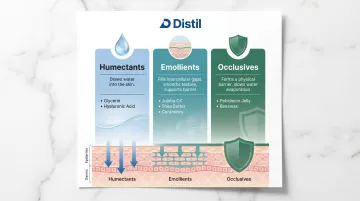
Many natural emollients serve more than one of these functions.
Why Dry Skin Needs Emollients
In xerotic skin, the lipid matrix between skin cells is depleted. This matrix normally consists of ceramides (50%), cholesterol, and free fatty acids in a 3:1:1 molar ratio. When this balance is disrupted, TEWL increases and the barrier weakens.
Natural emollients replenish fatty acids like linoleic acid, oleic acid, and lauric acid—compounds structurally similar to the skin's own lipids. That structural similarity means they integrate into the lipid matrix more readily than synthetic alternatives, which matters for both skin tolerance and formulation efficacy.
Industry Relevance
Euromonitor's 2024 Voice of the Consumer Beauty Survey found that 40% of consumers adopt a holistic beauty approach, prioritising clean ingredients and self-care. For personal care brands, this translates into real formulation decisions. Choosing an emollient means matching its fatty acid profile to skin type, evaluating texture and spreadability, assessing oxidative stability, and weighing sustainability credentials — all before a product reaches market.
13 Natural Emollients for Dry Skin
These 13 emollients are selected based on clinical evidence, fatty acid composition, formulation versatility, and widespread use in professional skincare. Each entry covers key actives and practical formulation guidance to support ingredient selection and product development.
Shea Butter
Shea butter, derived from the Vitellaria paradoxa tree, is rich in oleic acid (40-50%), stearic acid, and triterpenes. Its triterpenes—including lupeol cinnamate—inhibit iNOS, COX-2, and cytokines like TNF-alpha and IL-1beta, providing meaningful anti-inflammatory activity.
A clinical study on atopic dermatitis patients found shea butter extract performed on par with ceramide-precursor creams for barrier repair.
Formulation notes:
- Ideal for body butters, hand creams, lip balms, and hair products
- Solid at room temperature, melting on skin contact
- Unrefined (raw) shea retains more bioactive compounds than refined versions
- Typical use levels: 5-15% in leave-on creams
Coconut Oil
Coconut oil contains approximately 47-49% lauric acid, a saturated fatty acid with mild antimicrobial properties against S. aureus and P. acnes. A randomized, double-blind clinical trial on 117 children with mild-to-moderate atopic dermatitis showed virgin coconut oil achieved a 68.23% decrease in SCORAD (severity index) versus 38.13% for mineral oil.
Formulation notes:
- Solid at room temperature; melts on skin contact
- Best suited for body moisturizers, hair oils, lip care
- Comedogenic rating: 4 out of 5—avoid for acne-prone facial formulations
- Effective for reducing TEWL in xerotic and atopic skin
Jojoba Oil
Jojoba (Simmondsia chinensis) is technically a liquid wax ester, not a triglyceride oil. Its composition (97-98% long-chain esters) closely mimics human sebum, making it exceptionally compatible with skin. It absorbs quickly and helps balance oil production without clogging pores.
Formulation notes:
- Excellent oxidative stability compared to most plant oils
- Ideal for face serums, lightweight lotions, scalp oils
- Well-tolerated by all skin types, including acne-prone
- Comedogenic rating: 0-1
Sunflower Seed Oil
Sunflower seed oil contains approximately 65% linoleic acid (omega-6), essential for maintaining a healthy skin barrier. Research by Danby et al. (2013) demonstrated that sunflower seed oil preserved stratum corneum integrity and improved hydration, while oleic acid-dominant olive oil caused significant barrier damage and induced mild erythema.
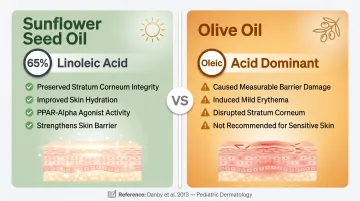
Formulation notes:
- Lightweight texture, suitable for lotions, serums, and facial oils
- Gentle and effective for barrier repair in dry and eczema-prone skin
- Affordable and scalable base ingredient
- Acts as a PPAR-alpha agonist, enhancing keratinocyte proliferation
Sweet Almond Oil
Sweet almond oil (Prunus amygdalus dulcis) is a balanced oil with 66-72% oleic acid and 18-22% linoleic acid. It contains tocopherol (vitamin E) and delivers mild anti-inflammatory benefits alongside emollient and skin-conditioning properties.
Formulation notes:
- Lightweight-to-medium texture
- Common in massage oils, baby skincare, body lotions, and facial oils
- Long shelf stability when stored correctly
- CIR Expert Panel confirmed it is safe for topical application with minimal irritation risk
- Note: Nut-derived; consider allergy labeling
Avocado Oil
Avocado oil (Persea gratissima) is rich in oleic acid (~70%), vitamins A, D, and E, and phytosterols that promote collagen synthesis and skin repair. It is one of the heavier natural oils with deeper penetration, making it effective for very dry, mature, or damaged skin.
Formulation notes:
- Heavier feel; best for night creams, intensive treatment masks, body butters
- Can be combined with lighter oils (sunflower, jojoba) to balance texture
- Suitable for dry and mature skin formulations rather than lightweight daily-use products
Argan Oil
Argan oil (Argania spinosa) is prized for its high tocopherol (600-900 mg/kg) and polyphenol content alongside 43-49% oleic acid and 29-36% linoleic acid. It provides dual skin conditioning and antioxidant activity, making it effective for both moisturization and anti-aging formulations.
Formulation notes:
- Lightweight and fast-absorbing despite richness
- Excellent for facial serums, hair oils, premium body care
- High consumer recognition and perceived value
- Look for UEBT (Union for Ethical BioTrade) certification for sustainable sourcing from Berber women's cooperatives
Colloidal Oatmeal
Colloidal oatmeal (finely milled Avena sativa) is an FDA-approved skin protectant under 21 CFR Part 347. Its beta-glucans form a protective film on skin, while avenanthramides deliver anti-inflammatory and anti-itch activity.
Liu-Walsh et al. (2021) demonstrated that 1% colloidal oat selectively promotes beneficial S. epidermidis growth over pathogenic S. aureus, supporting a prebiotic skin microbiome claim.
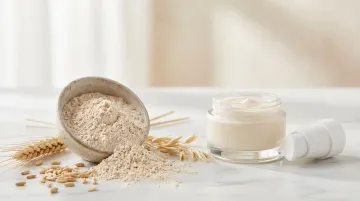
Formulation notes:
- Works well in lotions, creams, bath soaks, leave-on treatments
- FDA OTC drug status enables specific skin protection claims
- Essential for dermatologist-recommended or sensitive-skin product lines
- Minimum concentration: 0.25% for skin protectant claims
Aloe Vera
Aloe vera gel contains mucopolysaccharides (including acemannan) that lock in moisture, alongside vitamins A, C, and E and anti-inflammatory compounds. It functions as both a light emollient and soothing agent, ideal for post-sun, irritated, or inflamed dry skin.
Formulation notes:
- Typically used as a water-phase ingredient rather than oil-phase
- Pairs well with heavier butters and oils to balance texture
- High concentrations of active aloe (not diluted) are key for efficacy
- Available in gel, powder, and liquid extract forms
Calendula Extract
Calendula (Calendula officinalis) provides strong anti-inflammatory, wound-healing, and skin-softening properties. Its flavonoids and triterpenes (including faradiol esters) inhibit COX-2 and pro-inflammatory cytokines, making it especially beneficial for sensitive, irritated, and dry or cracked skin.
Formulation notes:
- Typically incorporated as an oil infusion or CO₂ extract
- Ideal for creams, balms, baby skincare
- Lightweight hydration without pore-clogging
- Often positioned in natural, botanical, or gentle product lines
Rosehip Oil
Rosehip oil (Rosa canina) is rich in linoleic acid (~42%), alpha-linolenic acid (~27%) (omega-3), and trans-retinoic acid (natural vitamin A analog). It moisturizes, supports skin regeneration, and improves the appearance of scars and fine lines alongside dry skin.
Formulation notes:
- Medium-weight, fast-absorbing
- Highly valued in premium facial oils and serums targeting aging or hyperpigmented dry skin
- Oxidative instability risk: Contains over 72% polyunsaturated fats; requires antioxidant stabilization (vitamin E) and cold-chain handling
- Shortest shelf life among common cosmetic oils
Squalane (Plant-Derived)
Plant-derived squalane (hydrogenated squalene from sugarcane, olive, or amaranth) mimics the squalene naturally produced by human sebaceous glands (10-13% of sebum). It is non-comedogenic, deeply hydrating, and exceptionally stable—a major advantage over animal-derived sources.
Formulation notes:
- Odorless, colorless, lightweight
- Compatible with virtually all formulation types
- Comedogenic rating: 0-1; well-tolerated by acne-prone and sensitive skin
- Ideal for facial serums, dry-touch body oils, sensitive skin products
- Preferred by clean beauty and vegan brands; sustainable sugarcane sourcing available
Cocoa Butter
Cocoa butter (Theobroma cacao) is high in stearic acid (~33-35%) and oleic acid (~33-39%), creating a rich occlusive layer that locks in moisture. It melts at body temperature (34-38°C), creating a smooth skin feel, and contains cocoa polyphenols with antioxidant properties.
Formulation notes:
- Solid at room temperature
- Excellent for body butters, lip balms, stretch mark creams, foot care
- Heavier texture limits use in lightweight facial formulations
- Unrefined cocoa butter retains scent and more bioactives; refined is neutral-scented
How to Choose the Right Natural Emollient for Your Skin Care Formula
Fatty Acid Profile Matching
Selection starts with fatty acid composition:
- Linoleic-dominant oils (sunflower, rosehip, argan): Best for sensitive, acne-prone, or eczema-prone skin. Danby et al. (2013) showed linoleic acid preserves stratum corneum integrity, while oleic acid-dominant oils damage the barrier.
- Oleic-dominant oils and butters (avocado, sweet almond, shea): Best for very dry and mature skin needing deep emolliency.
- Sebum-mimetic options (jojoba wax esters, squalane): Universal lightweight carriers suitable across all skin types.
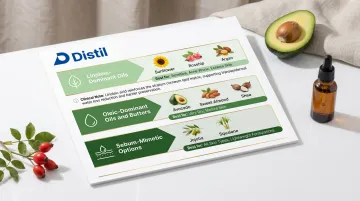
Practical Formulation Considerations
- Product format: Serums need lightweight oils (jojoba, squalane); body butters need rich butters (shea, cocoa)
- Target skin concern: Eczema-prone skin benefits from colloidal oatmeal (FDA skin protectant status); aging skin from rosehip oil (trans-retinoic acid)
- Regulatory requirements: Only colloidal oatmeal has FDA OTC drug status, enabling specific skin protection claims
- Sustainability and sourcing: RSPO certification for shea and coconut, UEBT for argan, sugarcane-derived squalane for clean beauty positioning
Working with an Experienced Partner
Getting fatty acid profiles and regulatory positioning right early saves significant reformulation cost later. For brands building or scaling formulations, Distil's R&D team—with backgrounds spanning L'Oréal, BASF, and Dow—handles application testing and quality verification from lab through commercial production, so emollient selection decisions are grounded in data, not guesswork.
Conclusion
The 13 natural emollients covered—from workhorse butters like shea and cocoa to precision-targeted oils like rosehip and squalane—each bring distinct fatty acid profiles, textures, and skin benefits. Choosing the right emollient is a formulation decision, not just a marketing one.
Evaluate each ingredient based on clinical data, formulation stability, skin type alignment, and sustainable sourcing credentials. Match linoleic-dominant oils to sensitive and barrier-compromised skin, oleic-dominant butters to very dry and mature skin, and sebum-mimetic options like jojoba and squalane to universal lightweight formulations.
Translating these formulation decisions into commercial-scale products requires reliable sourcing and application-specific R&D. Distil's personal care team works with formulators and brand owners on ingredient sourcing, stability trials, and scale-up support — from lab to commercial production. Reach out at contact@distil.market or +91 7902101101.
Frequently Asked Questions
What are natural emollients for dry skin?
Natural emollients are plant-derived oils, butters, and waxes that soften and smooth dry skin by filling gaps in the stratum corneum and replenishing the skin's lipid layer, reducing transepidermal water loss.
What are the best natural emollients for dry skin?
The most effective options include shea butter, jojoba oil, colloidal oatmeal, plant-derived squalane, and sunflower seed oil. Selection depends on fatty acid profiles, clinical evidence, and compatibility with different skin types and formulation needs.
How do emollients differ from humectants and occlusives?
Humectants attract water into skin (such as glycerin, hyaluronic acid), occlusives seal moisture in by forming a barrier (such as petroleum jelly, beeswax), while emollients smooth and soften skin by filling intercellular spaces. Many natural emollients perform more than one function.
Can natural emollients be used on sensitive or eczema-prone skin?
Yes. Colloidal oatmeal (FDA-approved skin protectant), sunflower seed oil, and jojoba oil are among the most studied and recommended for sensitive skin. Patch testing is recommended, and formulators should flag active skin conditions in product guidance.
Are natural emollients safe for all skin types, including acne-prone skin?
Not all natural emollients suit acne-prone skin. Non-comedogenic options like jojoba oil, squalane, and sunflower seed oil are safer choices, while heavy butters like cocoa butter or coconut oil (comedogenic rating 4/5) may clog pores in oily or acne-prone individuals.
How should natural emollients be incorporated into skincare formulations?
Oil-phase emollients (butters, oils) are added to the oil phase of emulsions, while water-soluble or gel-based emollients like aloe vera enter the water phase. Use levels, active compatibility, and oxidative stability should all be validated during formulation development.