That gap is closing rapidly. Regulatory shifts, consumer demand for transparent "free from" claims, and breakthroughs in plant-based feedstock chemistry are driving a credible, commercially viable transition to bio-based surfactants. The bio-based surfactants market for personal care was valued at $11.1 billion in 2025, with projections reaching $20.9 billion by 2035 — a reflection of both market pull and technical maturity.
This guide covers what bio-based surfactants are, how they differ from biosurfactants, which types dominate personal care formulations, their performance and regulatory considerations, and what sourcing and formulation teams need to evaluate before making the switch.
TL;DR:
- Bio-based surfactants are chemically synthesised from renewable plant feedstocks, not petroleum
- Leading types include APGs, isethionates, and betaines; fermentation-derived biosurfactants are emerging
- They offer improved biodegradability, skin mildness, and regulatory advantages
- Formulation adjustments are often required — direct substitution rarely works
- Sourcing requires scrutiny of bio-based content, feedstock traceability, and batch consistency
What Are Bio-Based Surfactants — and How Do They Differ from Biosurfactants?
The Role of Surfactants in Personal Care
Surfactants are surface-active agents with a dual molecular structure: a hydrophilic (water-attracting) head and a hydrophobic (oil-attracting) tail. This allows them to sit at the oil-water interface, where they remove dirt and sebum, generate foam, and stabilise emulsions. Remove them from the formula, and the product stops working.
Defining Bio-Based Surfactants
A surfactant is classified as bio-based when it is chemically synthesised from renewable, plant-derived feedstocks — such as sugars from corn or wheat, or fatty acids from coconut, rapeseed, or palm — rather than petroleum derivatives.
Important clarifications:
- Bio-based does not mean fully biodegradable. Environmental breakdown depends on molecular structure, not feedstock origin.
- Bio-based content varies. Some surfactants are 100% plant-derived; others are partial blends with petrochemical intermediates.
- While natural surfactants (bio-based plus biosurfactants) represent approximately 40% of the global surfactant market, the share that is fully bio-based in personal care specifically remains lower and harder to quantify.
Bio-Based Surfactants vs. Biosurfactants
Biosurfactants are produced directly by living microorganisms — typically bacteria or yeast — via fermentation. Unlike bio-based surfactants, which are chemically processed, biosurfactants are biosynthesised by the organism itself. Examples include:
- Rhamnolipids (produced by bacteria)
- Sophorolipids (produced by yeast)
Biosurfactants offer superior biodegradability and lower aquatic toxicity, but remain costlier and less available at commercial scale.
The Palm Oil Problem
The feedstock question doesn't end at "plant-derived." A significant share of bio-based surfactants rely on palm or palm kernel oil derivatives. Cosmetics use about 2% and home care about 3% of global palm and palm kernel oil, much of which is processed into surfactant feedstocks. Brands claiming sustainability credentials must evaluate:
- RSPO Mass Balance or Segregated certification
- Feedstock traceability documentation
- Deforestation-free sourcing commitments
Without rigorous supply chain oversight, "bio-based" can mask serious environmental and social risks.
Bio-Based vs. Conventional Surfactants: Key Comparisons
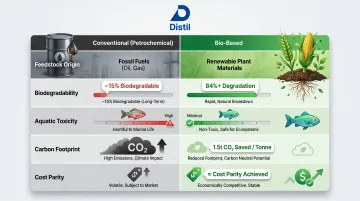
Those sourcing decisions directly affect performance credentials. The table below compares bio-based and conventional surfactants across the dimensions that matter most to formulators.
| Dimension | Conventional (Petrochemical) | Bio-Based |
|---|---|---|
| Feedstock origin | Petroleum derivatives (ethylene, propylene) | Plant-derived sugars and fatty acids (coconut, corn, palm) |
| Biodegradability | Variable; SLS/SLES readily biodegradable but byproducts persist | Generally high; APGs and CAPB show 84%+ degradation in OECD tests |
| Aquatic toxicity | SLS shows wide toxicity range (0.004–3509 mg/L) depending on organism and test | Lower; APGs and biosurfactants less toxic to aquatic species |
| Carbon footprint | Higher lifecycle emissions from fossil extraction and refining | Sophorolipids reduce GHG by 1.5 t CO₂ per tonne vs. ethoxylated surfactants |
| Cost parity | Baseline | APGs cost 2.5–3× SLES; premium narrows with scale |
Types of Bio-Based Surfactants Commonly Used in Personal Care
Alkyl Polyglucosides (APGs)
APGs are the most widely adopted bio-based surfactants in personal care. Synthesised from natural sugars (glucose from corn or wheat starch) and fatty alcohols (from coconut or palm kernel oil), they are:
- Non-ionic, making them compatible across pH ranges (4–12)
- Exceptionally mild, suitable for baby care, facial cleansers, and sensitive skin formulations
- Readily biodegradable and COSMOS-certified
- Accepted globally under natural and organic certification schemes
APGs also exhibit excellent electrolyte compatibility and can be used to thicken difficult-to-thicken anionic surfactant systems.
Fatty Acid-Based Surfactants (Sodium Cocoyl Isethionate & Sodium Lauroyl Methyl Isethionate)
Derived from coconut fatty acids, these mild anionic surfactants are popular in:
- Sulfate-free shampoos
- Bar cleansers (syndets)
- Facial cleansing products
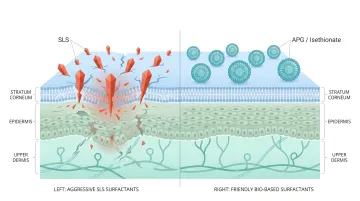
Skin compatibility is where sodium cocoyl isethionate (SCI) stands out. Its micelles are too large (33.5 Å radius) to penetrate stratum corneum pores (29 Å), reducing barrier disruption compared to SDS and conventional soaps — and producing a noticeably milder cleansing experience.
Cocamidopropyl Betaine (CAPB)
CAPB is an amphoteric co-surfactant derived primarily from coconut or palm kernel fatty acids, with a petrochemical amine component. While approximately 80% bio-based by content, it is rarely 100% plant-derived.
Key attributes:
- Boosts foam stability and mildness when combined with anionic surfactants
- Biodegrades 84% in 30 days under OECD 301D testing
- Widely used in shampoo, body wash, and facial cleanser formulations
Biosurfactants: Rhamnolipids and Sophorolipids
Produced through bacterial fermentation, rhamnolipids are among the most environmentally favourable surfactants available. Evonik's industrial-scale rhamnolipid plant in Slovakia, opened January 2024, brought these ingredients within reach for formulators who previously had no reliable supply. Key performance attributes include:
- Very low aquatic toxicity
- Superior biodegradability
- Excellent surface activity
Yeast-derived sophorolipids share these environmental advantages. Producers like Holiferm (UK) and Locus Performance Ingredients are actively scaling output to meet growing clean-beauty demand.
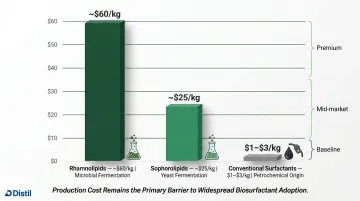
Cost remains the primary barrier for both. The table below compares pricing against conventional alternatives:
| Surfactant Type | Production / Min. Selling Price | Market Price |
|---|---|---|
| Rhamnolipids | ~$60/kg (min. selling price) | Premium |
| Sophorolipids | $5.1–$6.9/kg (production cost) | ~$25/kg |
| Conventional surfactants | — | $1–3/kg |
Both biosurfactants are characterised as very mild and are gaining traction in premium clean-beauty formulations where performance and sustainability justify the cost premium.
Emerging Innovations: Furan-Based and Upcycled Surfactants
Beyond biosurfactants, a newer category is emerging: surfactants built from upcycled agricultural waste streams. Sironix Renewables produces furan-based surfactants from corn and sugarcane byproducts, reporting 65–75% GHG reductions, up to 30% stronger foaming, and up to 90% milder skin profiles versus conventional alternatives. These figures come from internal testing; independent LCA validation has not yet been published.
Waste-stream upcycling represents a frontier category, combining sustainability with performance innovation.
Why Personal Care Brands Are Making the Switch: Key Benefits
Environmental Profile: Biodegradability and Aquatic Toxicity
Bio-based surfactants generally biodegrade faster and more completely than petrochemical equivalents. APGs are described as readily biodegradable, and CAPB achieves 84% degradation within 30 days under OECD 301D protocols.
Aquatic toxicity is also lower. SLS exhibits a broad range of toxic effects (0.004–3509 mg/L) across species and studies, whereas APGs and biosurfactants show consistently lower LC50 values, indicating reduced harm to aquatic organisms.
Skin Mildness and Consumer Safety
Many bio-based surfactants interact more gently with the skin's lipid barrier. APGs and isethionate-based surfactants cause less disruption to the stratum corneum than sulfonated surfactants like SLS or SLES. This makes them ideal for:
- Sensitive or compromised skin
- Baby care products
- Facial cleansers for dry or reactive skin types
The mildness advantage is structural: these surfactants have lower affinity for skin proteins and cause less transepidermal water loss, which is measurable in clinical patch testing.
Regulatory and Market Access Advantage
Bio-based surfactants are increasingly required or favoured under:
- EU Cosmetics Regulation (EC 1223/2009)
- COSMOS and Ecocert natural and organic certification schemes
- ISO 16128 standards for natural origin content
- "Free from sulfate/paraben" consumer positioning
The EU Council approved new detergents and surfactants regulations in December 2025, introducing digital labelling, product passports, and stricter environmental criteria. For brands already formulating with bio-based surfactants, meeting these new requirements becomes a process confirmation rather than a reformulation exercise.
Carbon Footprint Reduction
Bio-based surfactants sourced from renewable feedstocks can deliver meaningful lifecycle carbon savings. Two independently published LCA findings illustrate the scale of potential reductions:
- Holiferm's LCA: replacing 1 tonne of ethoxylated surfactant with sophorolipids cuts GHG emissions by 1.5 tonnes CO₂
- Clariant's bio-based ethylene oxide pathway: up to 2 kg CO₂ reduction per kg surfactant, depending on process configuration
As Scope 3 reporting becomes mandatory under frameworks like CSRD, ingredient-level emission reductions in the surfactant category directly improve a brand's disclosed carbon footprint — not just its sustainability narrative.
Formulation and Performance Considerations
Comparable Performance — But Rarely Direct Substitution
Bio-based surfactants can match or exceed conventional surfactants in foaming, emulsification, and cleansing. However, one-to-one substitution is rarely straightforward. Formulators must adjust:
- Surfactant system ratios
- Co-surfactant selection
- pH range optimisation
- Salt curves and electrolyte thickening behaviour
- Thickener compatibility
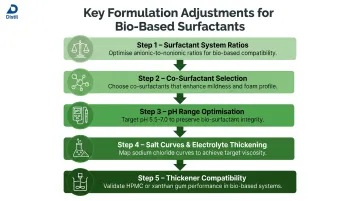
For example, APGs exhibit strong salt thickening for lauryl and coco glucoside grades, but lower thickening for caprylyl/capryl grades. Electrolyte-thickened SLS systems behave differently than APG-based formulas, requiring reformulation to achieve target viscosity and sensory profile.
Stability and Sensory Profile Differences
Bio-based and fermentation-derived surfactants can present formulation challenges:
- Narrower pH stability windows for some grades
- Natural colour or odor variation, particularly in biosurfactants
- Crystallisation below certain temperatures (e.g., APGs below 35°C)
- Heat and freeze-thaw stability may require additional testing
These are manageable through proper formulation development but must be factored into timelines and trial protocols.
The Value of Application-Specific R&D Support
Successful reformulation with bio-based surfactants requires application-specific expertise and compatibility testing. Distil's personal care formulation team — with backgrounds spanning L'Oréal, BASF, and Dow — works through application-specific trials from bench to commercial scale, helping formulators navigate compatibility decisions before they become costly production issues.
Regulatory Landscape and Certifications
Key Regulatory Frameworks
Three frameworks directly affect how bio-based surfactant claims are made, verified, and regulated:
- EU Cosmetics Regulation (EC 1223/2009) governs product safety and ingredient permissibility across the EU. It does not mandate bio-based content but shapes labelling and safety documentation requirements.
- ISO 16128 defines and measures natural and organic content in cosmetic ingredients, providing a standardised methodology for calculating bio-based content and enabling transparent, comparable claims.
- EU Detergents and Surfactants Regulation (approved December 2025) introduces digital product passports and enhanced environmental and safety requirements for surfactants, strengthening the regulatory case for bio-based alternatives.
Third-Party Certifications
Two certification schemes carry the most weight with buyers and regulators:
- COSMOS / Ecocert — the leading standard for natural and organic cosmetics. COSMOS requires surfactants to meet ultimate biodegradability criteria and restricts petrochemical processing routes. Not all surfactants marketed as "natural" or "bio-based" qualify.
- USDA BioPreferred — uses ASTM D6866 radiocarbon testing to verify bio-based carbon content. The programme covers personal care categories including bath products, providing audited validation of bio-based claims.
These certifications exist precisely because self-reported claims are difficult to verify — which is where greenwashing risk enters.
Avoiding Greenwashing
Vague terms like "plant-derived," "natural," or "eco-friendly" are not standardised and can mislead buyers. Brands should request:
- Full technical data sheets
- Bio-based content percentage (per ISO 16128 or ASTM D6866)
- Safety data (SDS, toxicology)
- Third-party certification documentation
Regulators are tightening this space on both sides of the Atlantic. The FTC has issued final orders barring companies from making unsupported "all-natural" claims on personal care products, and the EU's forthcoming Green Claims Directive will require substantiation for any environmental claim made on product packaging or marketing materials.
How to Source Bio-Based Surfactants at Scale
Key Supplier Evaluation Criteria
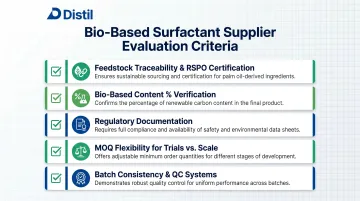
When selecting a bio-based surfactant supplier, evaluate:
- Feedstock traceability and sustainability credentials (RSPO certification, deforestation-free sourcing)
- Bio-based content percentage (verified via ISO 16128 or ASTM D6866)
- Regulatory documentation (SDS, TDS, toxicology data, certifications)
- Minimum order quantities and flexibility for trials vs. commercial scale
- Batch consistency and quality control systems
Scale-Up Challenges
Transitioning from lab or pilot trials to full commercial production introduces risks:
- Supply continuity — newer biosurfactants have limited global production capacity
- Batch-to-batch variation — fermentation-derived surfactants are more sensitive to process variables
- Cost fluctuation — feedstock and production costs can vary with agricultural commodity prices
These risks have real cost implications. Downstream processing accounts for 60–70% of biosurfactant manufacturing cost, and foam stability in aerated fermentation further complicates purification — meaning longer lead times and tighter supplier relationships are non-negotiable at commercial scale.
Capacity is expanding: Evonik's industrial-scale rhamnolipid facility and Holiferm's UK sophorolipid plant are meaningful developments. But supply remains constrained relative to demand, making single-supplier dependency a genuine sourcing risk for brands scaling quickly.
The Value of an Integrated Partner
Given these supply constraints, consolidating sourcing, formulation development, and scale-up under one partner significantly reduces execution risk. Distil operates this way — managing the full workflow from ingredient trial to commercial supply through its R&D team and 20+ manufacturing partner network, without requiring capital expenditure from the brand. Customers retain full IP ownership over their formulations throughout.
Frequently Asked Questions
What is the difference between bio-based surfactants and biosurfactants?
Bio-based surfactants are chemically synthesised from renewable plant-derived feedstocks like coconut or corn. Biosurfactants are produced directly by microorganisms via fermentation. Both are more sustainable than petrochemical alternatives, but differ in production method, cost, and environmental profile.
Are bio-based surfactants as effective as conventional surfactants in personal care formulas?
Yes, bio-based surfactants can match conventional performance in foaming, cleansing, and emulsification. However, formulation adjustments are often needed — direct substitution rarely works. Best results come from application-specific formulation work.
Do bio-based surfactants cost more than petroleum-derived alternatives?
Yes, bio-based surfactants currently carry a cost premium. APGs cost 2.5–3× more than SLES, though the gap is narrowing as production scales. That premium must be weighed against regulatory compliance benefits, stronger market positioning, and consumer willingness to pay for sustainable products.
What certifications should brands look for when sourcing bio-based surfactants?
The most recognized standards are COSMOS, Ecocert, NATRUE, and ISO 16128. Buyers should also request:
- ASTM D6866 test data for bio-based carbon content verification
- RSPO certification for any palm-derived feedstocks
Which bio-based surfactants are best suited for sulfate-free shampoo formulations?
Sodium cocoyl isethionate, sodium lauroyl methyl isethionate, and alkyl polyglucosides are well-suited bio-based options for sulfate-free shampoos, offering good foam, mildness, and consumer-acceptable sensory profiles.