Introduction
Most people grab an SPF 15 face moisturizer expecting simple, reliable daily coverage. The problem: many products marketed as "moisturizers with SPF" rely on chemical UV filters — oxybenzone or avobenzone — that degrade under UV exposure, making them less dependable for all-day wear, especially under makeup.
The real differentiator is zinc oxide.
As a physical (mineral) UV filter, zinc oxide reflects UV rays continuously without degrading — meaning your SPF 15 coverage stays effective from morning through the end of the day, with or without makeup on top.
Research from the Skin Cancer Foundation confirms that regular daily use of SPF 15 sunscreen, applied as directed, can reduce squamous cell carcinoma risk by roughly 40% and melanoma risk by 50%. The prerequisite is daily follow-through, and zinc oxide SPF 15 makes that practical.
This guide covers what makes zinc oxide the right active for daily SPF 15 use, reviews the best verified products available, and addresses who SPF 15 is actually appropriate for.
Key Takeaways
- Zinc oxide is a physical UV filter that reflects UVA and UVB rays without breaking down over time
- SPF 15 blocks 93% of UVB rays — adequate for low-exposure daily routines like commuting or indoor work
- Non-nano zinc oxide particles do not penetrate the skin barrier, making them the safer choice for daily facial use
- Compliant SPF 15 zinc oxide moisturizers are rarer than most consumers expect — the verified market is narrower than it appears
- Formula quality matters: particle size, coating, and supporting ingredients determine both SPF performance and skin feel
What Makes Zinc Oxide the Right Active for Daily SPF 15 Face Moisturisers
Physical vs. Chemical UV Filters
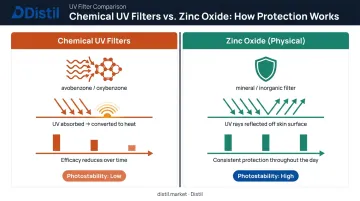
Chemical UV filters — avobenzone, oxybenzone, octinoxate — work by absorbing UV radiation and converting it to heat. The issue is photostability (stability under UV light). Peer-reviewed research published in PMC found that avobenzone-containing UV-filter mixtures show measurable changes in efficacy and toxicity after UV irradiation. For a morning moisturiser worn all day without reapplication, this matters.
Zinc oxide works differently. It sits on the skin surface and physically deflects both UVA and UVB rays. It does not degrade under sunlight, making it more reliable for continuous all-day coverage in a face moisturiser context.
Broad-Spectrum Coverage
Zinc oxide is notable for covering the full UV spectrum — UVA1, UVA2, and UVB — within a single active ingredient. According to StatPearls, microfine zinc oxide provides broad UVA protection including UVA1, which many chemical filters do not adequately address alone. This broad coverage explains why dermatologists frequently recommend zinc oxide formulas for patients with hyperpigmentation, rosacea, or reactive skin.
SPF 15 for Daily, Low-Intensity Exposure
That broad-spectrum coverage becomes most useful when matched to the right SPF level for the use context. The AAD states SPF 15 blocks 93% of UVB rays, and the FDA accepts broad-spectrum SPF 15 or higher as a protective baseline for regular daily use. The limits are real, though: the AAD recommends SPF 30 or higher as a general guideline, and SPF 15 is not suited for extended outdoor activity or high UV-index conditions.
SPF 15 is suited for:
- Indoor workers with limited sun exposure
- Commuters in overcast or low-UV-index climates
- Individuals layering multiple SPF products across their routine
- Daily baseline protection as part of a broader skin health regimen
Non-Nano Zinc Oxide: The Safety Consideration
The European Scientific Committee on Consumer Safety (SCCS) defines nano materials in the 1–100 nm range. SCCS-reviewed data found no observed skin penetration through intact skin for zinc oxide under evaluated conditions. Non-nano zinc oxide — particles above that 100 nm threshold — is the standard referenced when brands make no-penetration claims, though documentation of particle size and test methodology is required to support such statements.
For formulators, particle size selection affects both safety profile and cosmetic outcome. Smaller particles reduce white cast but require careful safety substantiation; larger non-nano particles are more straightforward from a regulatory standpoint.
Best Zinc Oxide SPF 15 Face Moisturisers for Daily Use
A quick clarification before diving in: the verified SPF 15 zinc-oxide-only face moisturiser market is narrower than most roundup articles suggest. Mass-market brands like Neutrogena, Eucerin, and CeraVe predominantly use chemical actives or SPF 30 formulations in this category. The products below are selected on the basis of verified label compliance — zinc oxide as the sole sunscreen active, confirmed SPF 15, and facial moisturiser positioning.
Best Overall: Aesop Sage & Zinc Facial Hydrating Lotion SPF 15
Aesop's Sage & Zinc Facial Hydrating Lotion is the most clearly verified zinc-oxide-only SPF 15 facial moisturiser on the market. The DailyMed label confirms zinc oxide 19.5% as the sole sunscreen active at SPF 15.
The formula blends UV protection with botanical extracts including sage, a plant ingredient associated with antioxidant properties, in a lotion texture Aesop positions for daily wear across most skin types including sensitive. It is fragrance-forward by Aesop's design philosophy, which should be noted for fragrance-sensitive users.
| Feature | Detail |
|---|---|
| Zinc Oxide Concentration | 19.5% (verified via DailyMed) |
| Skin Type | Most skin types, including sensitive |
| Price Range | Approximately $49 USD; regional pricing varies |
| Certifications | No EWG Verified or SCF Seal confirmed |
Best Budget / Lower-Cost Option: MooGoo Cover Up Buttercup SPF 15
MooGoo is an Australian natural skincare brand known for straightforward, low-irritant formulations. Their Cover Up Buttercup positions zinc oxide as the sole sunscreen active at SPF 15, with a focus on accessibility and skin tolerance across all ages.
The formula is designed for face and body use, with a texture suited to daily application. MooGoo publishes full ingredient lists and avoids synthetic fragrances and harsh preservatives — a practical option for consumers who want an affordable zinc oxide SPF 15 without moving to a chemical-filter formula. The exact zinc oxide percentage was not consistently confirmed across sources at time of writing; verify the current Drug Facts panel before purchase.
| Feature | Detail |
|---|---|
| Zinc Oxide Concentration | Zinc oxide sole active; verify current label |
| Skin Type | All skin types, all ages |
| Price Range | Approximately $15.90 USD for 120g |
| Certifications | None verified |
Best for Sensitive or Dry Skin: ATZEN BALANCE Bio-Active Complex SPF 15
ATZEN positions its BALANCE Bio-Active Complex as a daily moisturiser with soothing properties, described on brand pages as safe for sensitive skin and around the eyes. The DailyMed label confirms zinc oxide 18.9% as the sunscreen active at SPF 15.
Note on label discrepancy: A marketing snippet showed 11.9% while DailyMed showed 18.9%. Always refer to the current Drug Facts label for accurate active ingredient percentages.
| Feature | Detail |
|---|---|
| Zinc Oxide Concentration | 18.9% per DailyMed (verify current label) |
| Key Supporting Ingredients | Confirm current formula via brand page |
| Price Range | Not reliably confirmed at time of research |
| Certifications | None verified |
Best Tinted Formula: Attitude Oceanly Phyto-Sun Tinted SPF 15
Attitude's Oceanly line launched as a solid skincare format, and their tinted SPF 15 variant has an EWG product search entry. The DailyMed label confirms zinc oxide 10% as the sole sunscreen active at SPF 15.
The tinted format uses a solid cream/stick texture rather than a traditional lotion, which suits some users as a lightweight coverage option. The tinting helps eliminate white cast — a meaningful advantage for medium to deeper skin tones where untinted zinc oxide formulas at higher concentrations tend to show.
Shade range and medium-to-deep skin tone performance were not confirmed from authoritative sources at time of writing — check current shade availability directly with the brand.
| Feature | Detail |
|---|---|
| Zinc Oxide Concentration | 10% (verified via DailyMed) |
| Format | Solid tinted cream/stick |
| Price Range | Not verified from official source |
| Certifications | EWG product search result exists; SCF Seal not confirmed |
Is SPF 15 Enough Protection for Everyday Facial Use?
The honest answer is: it depends entirely on how you use it.
Where SPF 15 zinc oxide performs well:
- Daily indoor work with incidental sun exposure (windows, commuting)
- Overcast or low-UV-index climates
- As a baseline layer in a skincare routine that includes additional SPF coverage
- Consistent daily wear where routine adherence matters more than SPF number
Where SPF 15 falls short:
- Extended outdoor activity
- Beach or water exposure
- High UV-index summer days
- Any scenario involving more than 20–30 minutes of direct sun
The AAD recommends SPF 30 or higher as a general guideline. The FDA frames SPF 15 or higher as a regulatory baseline for regular protective use. These are compatible positions — SPF 15 is a recognized floor for daily protection, not an optimal target for outdoor activity.
Consistency matters as much as SPF number. A JAAD-published trial found that daily sunscreen use reduced UV-induced skin damage compared with intermittent use of equal or higher SPF products. A zinc oxide SPF 15 applied every morning outperforms an SPF 50 used sporadically.
The zinc oxide advantage in this context is photostability. Unlike chemical SPF 15 alternatives that degrade under UV exposure over a full day, zinc oxide maintains its protective mechanism without breakdown. That makes it better suited to a moisturizer applied once in the morning and worn under makeup all day.
How We Chose These Products
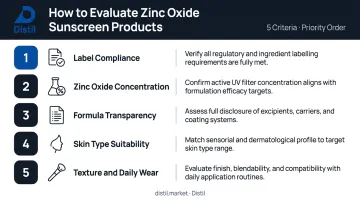
Products were evaluated against these criteria, in order of priority:
- Label compliance — SPF 15 confirmed on an official label or DailyMed entry; zinc oxide listed as the sole sunscreen active
- Zinc oxide concentration — Verified from the Drug Facts panel, not marketing copy (the FDA permits zinc oxide up to 25% as an OTC sunscreen active)
- Formula transparency — Clean supporting ingredients, absence of known irritants, non-comedogenic claims at the product level
- Skin type suitability — Dermatologist recommendations or clinical tolerability data where available
- Texture and daily wear compatibility — Lightweight finish, makeup compatibility, absence of heavy white cast
Common mistakes to avoid when shopping:
- Checking SPF number without verifying whether the active is zinc oxide or a chemical filter
- Trusting front-of-pack claims over the Drug Facts or INCI ingredient list
- Selecting a texture incompatible with your skin type or foundation routine
- Assuming "mineral" automatically means zinc oxide only — some products blend mineral and chemical actives
A Note for Formulators
Zinc oxide quality determines both SPF efficacy and consumer experience in the final product. Particle size, surface coating, and purity affect UV attenuation, white cast, skin feel, and emulsion stability. There is no universal zinc oxide percentage for SPF 15: verified labels in this research used 10%, 18.9%, and 19.5%, with the final outcome depending on dispersion method, particle coating, and vehicle.
For personal care brands developing their own zinc oxide SPF 15 moisturizers, Distil supplies zinc oxide powders (ultra-fine, micronized, and surface-treated formats) and pre-dispersed zinc oxide systems formulated for minimal white cast and consistent UV attenuation in daily wear applications.
Distil's R&D team, with backgrounds spanning L'Oréal, BASF, and Dow, provides application-specific formulation support from lab-scale trials through to commercial production. Customer IP is retained in full throughout the engagement.
Conclusion
A zinc oxide SPF 15 face moisturiser serves a specific, well-defined role: daily baseline protection for low-exposure routines, combining photostable mineral UV filtration with moisturising function in a single step. For the indoor-to-commute use case, it holds an advantage chemical SPF 15 products don't — the UV protection stays stable across a full day of wear. It is not a substitute for SPF 30+ in outdoor conditions, but within its intended scope it performs reliably.
For consumers: Select from the verified products above based on your skin type, budget, and format preference. Prioritise label compliance over marketing claims — check that zinc oxide is listed as the sunscreen active in the Drug Facts panel.
For brands and formulators: If you are developing a zinc oxide SPF 15 moisturiser, ingredient decisions made at formulation stage directly shape both efficacy and end-user experience. Distil's personal care team supports brands from ingredient selection through to commercial scale, with zinc oxide grades tailored to your specific formulation requirements. Reach out at contact@distil.market or visit distil.market/partner-with-us.
Frequently Asked Questions
What is the best zinc oxide sunscreen for face?
For a verified zinc-oxide-only SPF 15 daily moisturizer, Aesop Sage & Zinc leads the category on formulation transparency and label compliance. The right choice depends on your skin type — refer to the product table above. Look for non-nano zinc oxide listed as the sole sunscreen active on the Drug Facts panel.
Is SPF 15 enough for a face moisturizer?
SPF 15 is adequate for daily, low-exposure routines — indoor work, commuting, overcast conditions. It is not sufficient for extended outdoor activity; use SPF 30 or higher in those situations — and zinc oxide SPF 15 holds an advantage over chemical filters in extended wear since it does not degrade under sunlight.
What percentage of zinc oxide is needed to achieve SPF 15?
There is no single universal percentage — verified SPF 15 products in this review used concentrations ranging from 10% to 19.5%. Final SPF is determined by particle size, surface coating, dispersion method, emulsion vehicle, and application thickness, not by zinc oxide concentration alone.
Does a zinc oxide SPF 15 face moisturizer leave a white cast?
White cast is primarily a function of zinc oxide concentration and particle size. SPF 15 products typically use lower concentrations than SPF 50 formulas, which reduces the effect. Modern micronized formulas are nearly invisible on most skin tones; tinted options like Attitude Oceanly eliminate the issue entirely.
Can I use a zinc oxide SPF 15 moisturizer under makeup?
Yes. Zinc oxide is photostable and does not degrade under cosmetics the way chemical filters can. Choose a lightweight, non-greasy formula and allow it to absorb fully before applying foundation for best results.
Is zinc oxide safe for sensitive and acne-prone skin?
Zinc oxide is one of the gentlest UV filters available. The FDA classifies it as a recognized safe and effective OTC sunscreen active. Peer-reviewed dermatology research supports zinc's anti-inflammatory properties, and it is widely recommended for rosacea-prone and reactive skin. Non-comedogenic claims should be verified at the finished-product level.