Introduction
Consumer interest in clean beauty has pushed mineral sunscreen from niche to mainstream. The mineral sunscreen market sat at $4.2 billion in 2024 and is projected to nearly double by 2030 — driven largely by people who want to know exactly what they're putting on their skin.
That transparency push leads many people to make their own. Homemade zinc oxide sunscreen sounds straightforward — melt some oils, mix in powder, done. But results vary widely based on ingredient grade, zinc percentage, mixing technique, and storage conditions. A batch that looks right can still deliver far less protection than intended.
What follows is a complete breakdown: every ingredient and its functional role, a step-by-step recipe, and the specific variables that separate a batch with real UV protection from one that just looks the part.
Key Takeaways
- Zinc oxide (non-nano) is the only active UV blocker — carrier oils and butters do not substitute for it
- Four core ingredients: zinc oxide, a carrier oil, shea or cocoa butter, and beeswax
- SPF is unverified without lab testing — the zinc percentage gives an estimate, not a guarantee
- Reapply every 60–90 minutes, and immediately after swimming or heavy sweating
- Best for moderate, short-duration sun exposure — not a substitute for tested commercial sunscreen in high-UV conditions
Ingredients You'll Need and What Each Does
Every ingredient in a natural sunscreen has a functional job. Swapping carelessly — using the wrong grade of zinc oxide, or substituting one oil for another without adjusting ratios — can compromise both performance and skin safety.
Active UV Filter: Non-Nano Zinc Oxide
Zinc oxide is the only UV-filtering ingredient in this recipe. It works by physically blocking and scattering both UVA and UVB rays — what's called broad-spectrum protection.
Non-nano zinc oxide particles stay on the skin's surface — nano-sized particles are small enough to raise penetration questions, which is why the distinction matters. Under FDA OTC Monograph M020, zinc oxide is permitted as a sunscreen active at up to 25% concentration, and labels must state "children under 6 months of age: Ask a doctor."
On SPF estimates, the commonly cited rule of thumb is that roughly 1% zinc oxide by total weight contributes approximately 1.6 SPF units. Treat these as directional — the actual SPF of a finished formulation depends on:
- Particle grade and surface treatment
- Dispersion uniformity in the base
- Film thickness on skin during testing
- The specific test method used
These figures are unverified by regulatory testing. A recipe with 20% zinc may yield an estimated SPF 30, but that number only holds under controlled conditions.
Particle size and purity also become critical when scaling from a bench batch to commercial production — consistent zinc oxide specifications directly affect both UV performance and batch-to-batch reproducibility. Distil supplies zinc oxide UV filters in ultra-fine, micronized, and surface-treated formats, with powder and pre-dispersed dispersion options for formulators working at volume.
Carrier Oils
Carrier oils form the moisturizing base and affect texture, spreadability, and skin feel. Common choices include:
- Coconut oil — solid at room temperature, contributes firmness; in vitro studies recorded an SPF of approximately 7
- Sweet almond oil — lighter texture, in vitro SPF of approximately 4–5
- Avocado oil — rich and nourishing; often cited as having a higher natural SPF, though no authoritative controlled study confirms this
Carrier oils are not sunscreen actives. Their minor UV absorbance values come from in vitro lab absorption studies, not from finished-formula SPF testing under FDA methods. Do not factor them into your SPF calculation.
Shea Butter or Cocoa Butter
Butter adds richness, helps the formula adhere to skin, and affects the final product firmness. Shea butter produces a creamier consistency; cocoa butter creates a stiffer bar-like texture. In warm climates, cocoa butter is often preferred for stability.
Beeswax
Beeswax is the structural binder. It determines whether the finished product is lotion-like or solid, and it improves water resistance. More beeswax means a firmer product; less gives a more spreadable consistency. Candelilla wax is a suitable vegan alternative, though it's harder than beeswax — use roughly half the quantity when substituting.
Optional Boosters
- Vitamin E (tocopherol): Antioxidant that extends shelf life; typical usage rate is 0.05–1%
- Carrot seed oil: Additional antioxidant and skin-repair properties
- Cocoa powder: Adds a natural tint to reduce the white cast from zinc oxide on medium and darker skin tones; doesn't affect UV protection
One critical warning: Avoid all phototoxic essential oils. Expressed bergamot, cold-pressed lemon, cold-pressed lime, grapefruit, and bitter orange peel oil all contain furocoumarins — compounds that increase UV sensitivity and can cause severe skin burns in sun-exposed products. IFRA standards restrict these oils in leave-on formulations for this reason. Safe alternatives for fragrance include lavender and frankincense.
How to Make Natural Sunscreen at Home Step by Step
This recipe uses a simple double-boiler melt-and-mix method. Expect under 30 minutes of active work, plus about an hour for cooling — and a finished batch of 8–10 oz.
Step 1: Measure and Prepare
Weigh all ingredients before starting — especially zinc oxide, which must be measured by weight, not volume, for any SPF estimate to be meaningful. Have your storage container ready and pre-weighed if you're calculating the final zinc percentage.
Safety first: Wear a dust mask when handling zinc oxide powder. NIOSH lists zinc oxide inhalation symptoms including cough, fever, nausea, and decreased pulmonary function. It's safe on skin but hazardous when airborne during handling.
Step 2: Melt the Base
- Combine carrier oil, butter, and beeswax in a glass mason jar or heat-safe container
- Place the jar in a pot with 2–3 inches of simmering water (double boiler method)
- Stir occasionally until fully melted
- Keep temperature below 185°F — excessive heat can discolor beeswax
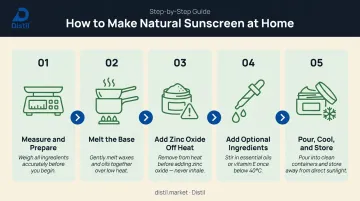
Step 3: Add Zinc Oxide Off Heat
Remove the jar from heat before adding zinc oxide. Add the powder gradually while stirring continuously to prevent clumping. A stick blender gives a smoother, more even result than a hand whisk.
⚠️ Never add zinc oxide while still over direct heat.
Step 4: Add Optional Ingredients
Once slightly cooled but still liquid, stir in vitamin E, carrot seed oil, and any non-phototoxic essential oils. Add cocoa powder at this stage and blend thoroughly for even tint distribution.
Step 5: Pour, Cool, and Store
- Pour into storage containers
- Stir every few minutes as the product cools to prevent zinc oxide from settling
- Cool in the refrigerator if possible — this reduces the grainy texture that shea butter develops during slow cooling
- Store in a cool, dry place away from direct sunlight
- Use within 6–12 months; vitamin E extends shelf life, and an opaque container limits light degradation
Key Variables That Affect SPF and Effectiveness
Four controllable variables determine how well a homemade sunscreen actually performs. Ignoring any one of them can result in a product with far less protection than intended.
Zinc Oxide Percentage by Weight
This is the single most important variable. Calculate it as:
(grams of zinc ÷ total grams of finished product) × 100
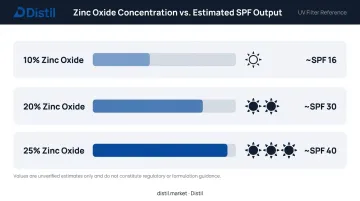
| Zinc % by weight | Estimated SPF |
|---|---|
| 10% | ~SPF 16 |
| 20% | ~SPF 30 |
| 25% | ~SPF 40 |
These are rough estimates — not verified by regulatory testing. DailyMed records show that two different commercial formulas with the same 20% zinc oxide content are labeled as SPF 30 and SPF 50, respectively. The finished formulation matters as much as the percentage.
The FDA caps zinc oxide in commercial sunscreens at 25%. Going beyond this in a DIY formula doesn't increase SPF proportionally, and the texture becomes noticeably heavy and difficult to spread.
Uniformity of Zinc Dispersion
If zinc oxide is unevenly distributed, some areas of skin receive high protection while others receive almost none. Clumping is the most common technical failure in DIY batches.
Fix it by:
- Add zinc oxide only after removing the base from heat
- Stir continuously while incorporating the powder
- Use a stick blender rather than a hand whisk for even dispersion
Reapplication Frequency
Homemade sunscreens lack the stabilizers and water-resistance enhancers in commercial formulas. Reapply every 60–90 minutes, and immediately after swimming, toweling off, or heavy sweating. Skipping reapplication is the leading cause of burns when using DIY sunscreen — not the formula itself.
Grade and Source of Zinc Oxide
Not all zinc oxide powders are equivalent. Use only non-nano, pharmaceutical-grade or cosmetic-grade zinc oxide. Industrial-grade zinc is not suitable for skin application.
For anyone scaling beyond a single DIY batch, verify the following with your supplier before ordering:
- Particle size distribution certificate (confirming non-nano)
- Grade designation (cosmetic-grade or pharmaceutical-grade)
- Absence of nano-sized particles confirmed by batch documentation
- Country of origin and manufacturing standard (e.g., ISO, GMP)
When Homemade Sunscreen Makes Sense (and When to Be Cautious)
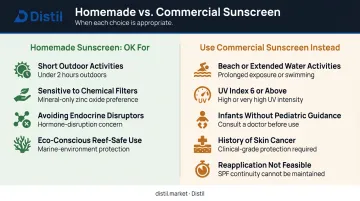
Homemade sunscreen is a reasonable option in specific circumstances — but it should not replace tested, broad-spectrum commercial sunscreen in high-risk situations.
Appropriate use cases:
- Short outdoor activities under 2 hours in moderate sun (UV Index below 6)
- Individuals with confirmed sensitivities to chemical filters like oxybenzone or PABA
- Those avoiding endocrine-disrupting ingredients in their skincare
- Eco-conscious users seeking reef-safe formulations — oxybenzone and octinoxate are banned in Hawaii and several other jurisdictions due to coral reef damage
When to opt for commercial alternatives:
- Beach days or extended water activities
- UV Index 6 or above — the WHO classifies UV Index 6–7 as "high exposure"
- Use on infants without pediatric guidance
- Anyone with a history of skin cancer or high photosensitivity
- Activities where reapplication every 60–90 minutes isn't feasible
Common Mistakes and How to Troubleshoot Them
Inhaling zinc oxide during mixing — Always wear a dust mask. Zinc oxide powder is hazardous to lungs when airborne, even though it's safe when applied to skin.
Using phototoxic essential oils — Expressed bergamot, grapefruit, cold-pressed citrus oils, and bitter orange peel oil cause photosensitization and can produce severe skin burns in sun-exposed products. Use lavender or frankincense instead.
Grainy or lumpy texture — Two causes: shea butter recrystallizing during slow cooling, or zinc oxide not fully dispersed. Fix both by cooling rapidly in the refrigerator immediately after pouring and using a stick blender during zinc incorporation.
Separation or failure to set — Usually caused by an incorrect beeswax ratio or mixing when the base is too hot. If separation occurs during cooling, reheat gently and re-stir. In warm climates, increase the beeswax quantity in the next batch.
Frequently Asked Questions
Does homemade natural sunscreen actually protect against UV rays?
Yes. Zinc oxide physically blocks and scatters UVA and UVB rays as long as it stays on the skin. SPF is estimated rather than verified in a DIY formula, so actual protection levels can't be guaranteed without lab testing.
What SPF does this homemade recipe provide?
SPF depends on the percentage of zinc oxide by total weight (roughly 1% ≈ 1.6 SPF units). A recipe with approximately 20% zinc oxide yields an estimated SPF 30, though this hasn't been verified by a regulatory body or formal in vivo testing.
Is this sunscreen safe for babies and children?
Non-nano zinc oxide is the only FDA-permitted sunscreen active for infants under 6 months. That said, DIY formulas are unregulated and untested — consult a pediatrician before use on young children, and avoid all essential oils in any formula intended for infants.
How long does homemade sunscreen last before it goes bad?
Most batches last 6–12 months when stored in a cool, dry place away from light. Vitamin E helps slow oxidation, and an opaque container extends shelf life by limiting UV degradation of the oils.
Why does my sunscreen leave a white cast?
Non-nano zinc oxide particles are intentionally large — that's what keeps them on the skin's surface rather than penetrating it. The trade-off is a visible white tint. Adding a small amount of cocoa powder, adjusted to your skin tone, during mixing reduces the cast without affecting UV protection.
Can I use this sunscreen while swimming or playing sports?
Beeswax provides some resistance to water, but homemade sunscreen is not waterproof. Reapply every 60–90 minutes and immediately after swimming, toweling off, or heavy sweating.