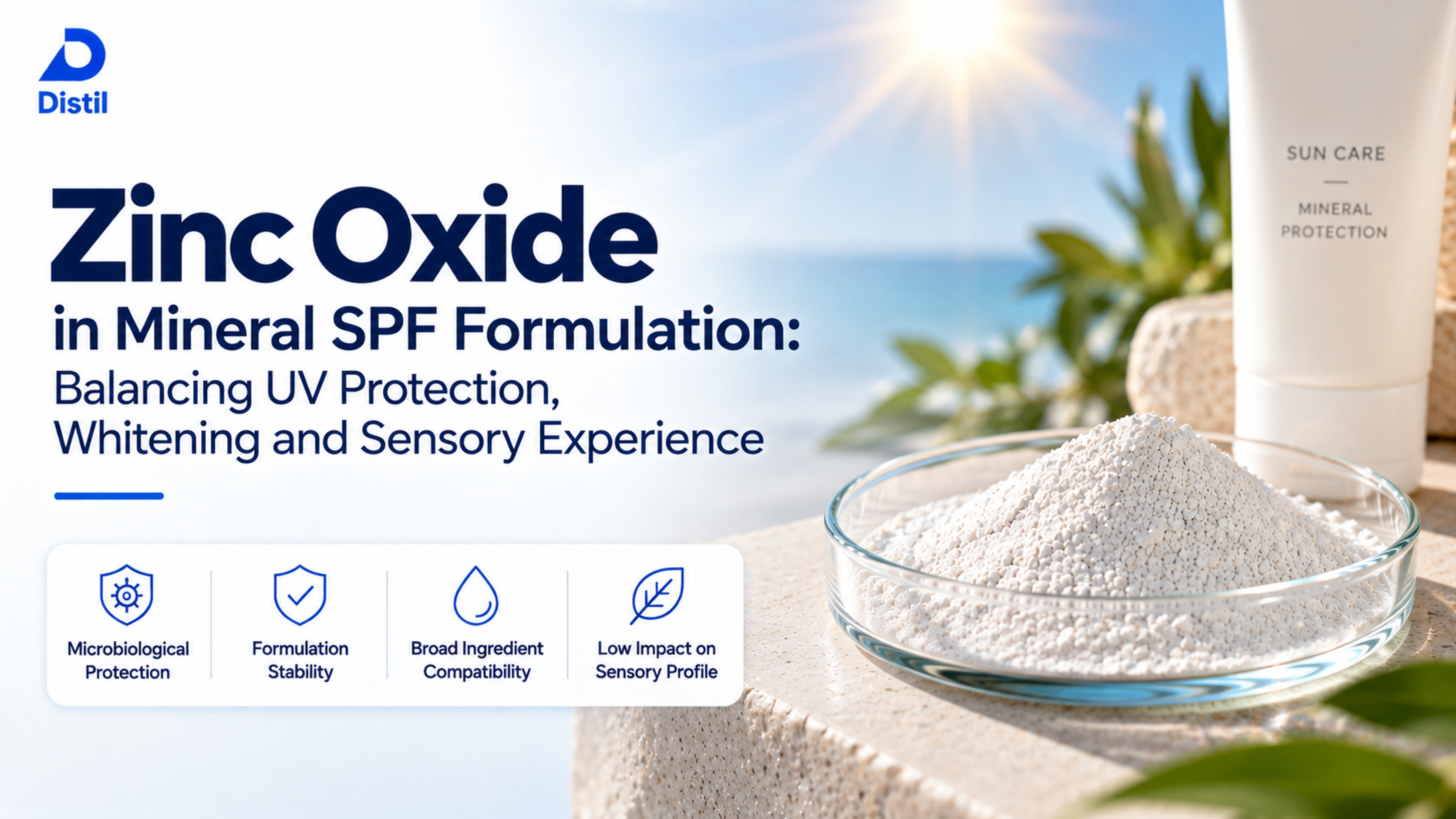
As sunscreen technology continues to evolve, Zinc Oxide (ZnO) remains one of the most widely discussed inorganic UV filters in modern sun care systems. Its unique combination of broad-spectrum UV protection, photostability, skin compatibility, and formulation adaptability continues to strengthen its role in advanced SPF development.
As consumer preferences shift toward safer, more effective, and skin-friendly sun protection solutions, Zinc Oxide continues to be an important ingredient shaping next-generation sunscreen formulations.
Zinc Oxide continues to play a critical role in modern sunscreen systems due to its ability to provide broad-spectrum UV protection across UVA and UVB ranges. Its strong photostability, compatibility with sensitive skin formulations, advancements in particle engineering, and growing use in hybrid sunscreen systems make it a foundational ingredient in the evolution of advanced sun care development.
One of the key advantages of Zinc Oxide is its ability to provide broad-spectrum protection across both UVB and UVA regions.
ZnO functions through both UV absorption and scattering mechanisms, offering particularly strong performance in the UVA1 wavelength range (340–400 nm).
Broad UVA protection remains an important factor when addressing concerns related to photoaging and long-term photo damage, making Zinc Oxide highly relevant in modern sunscreen development.
A defining characteristic of Zinc Oxide is its high stability under UV exposure.
This allows sunscreen formulations to maintain protection performance over extended periods and improves formulation reliability in long-wear applications.
Compared to certain organic UV filters, Zinc Oxide demonstrates significantly lower photodegradation concerns, making it a dependable option for advanced SPF formulations focused on long-term performance consistency.
Zinc Oxide is widely recognized for its compatibility with sensitive skin formulations.
It is commonly incorporated into pediatric sunscreen products, post-procedure skincare systems, and formulations designed for daily use.
Its naturally low irritation profile, combined with its inert nature, makes Zinc Oxide a preferred ingredient for gentle SPF systems developed specifically for sensitive skin applications.
Recent advancements in particle engineering continue to improve the formulation performance of Zinc Oxide-based sunscreen systems. Advanced particle engineering helps:
These improvements allow formulators to develop mineral sunscreen products that deliver protection while maintaining better aesthetic appeal and consumer experience.
Several factors continue to reinforce Zinc Oxide’s growing importance in modern sunscreen innovation. Key factors driving continued adoption include:
As formulation technologies continue to advance, Zinc Oxide is strengthening its position as a foundational ingredient in modern sun care systems and future sunscreen innovation.
-
+
Its broad-spectrum coverage, photo-stability, sensitive-skin compatibility, and alignment with evolving safety standards continue to drive its growing use in advanced sunscreen systems.
-
+
Hybrid SPF formulations combine Zinc Oxide with organic UV filters such as Lignin to achieve broad-spectrum protection while improving formulation stability and sensory performance.
-
+
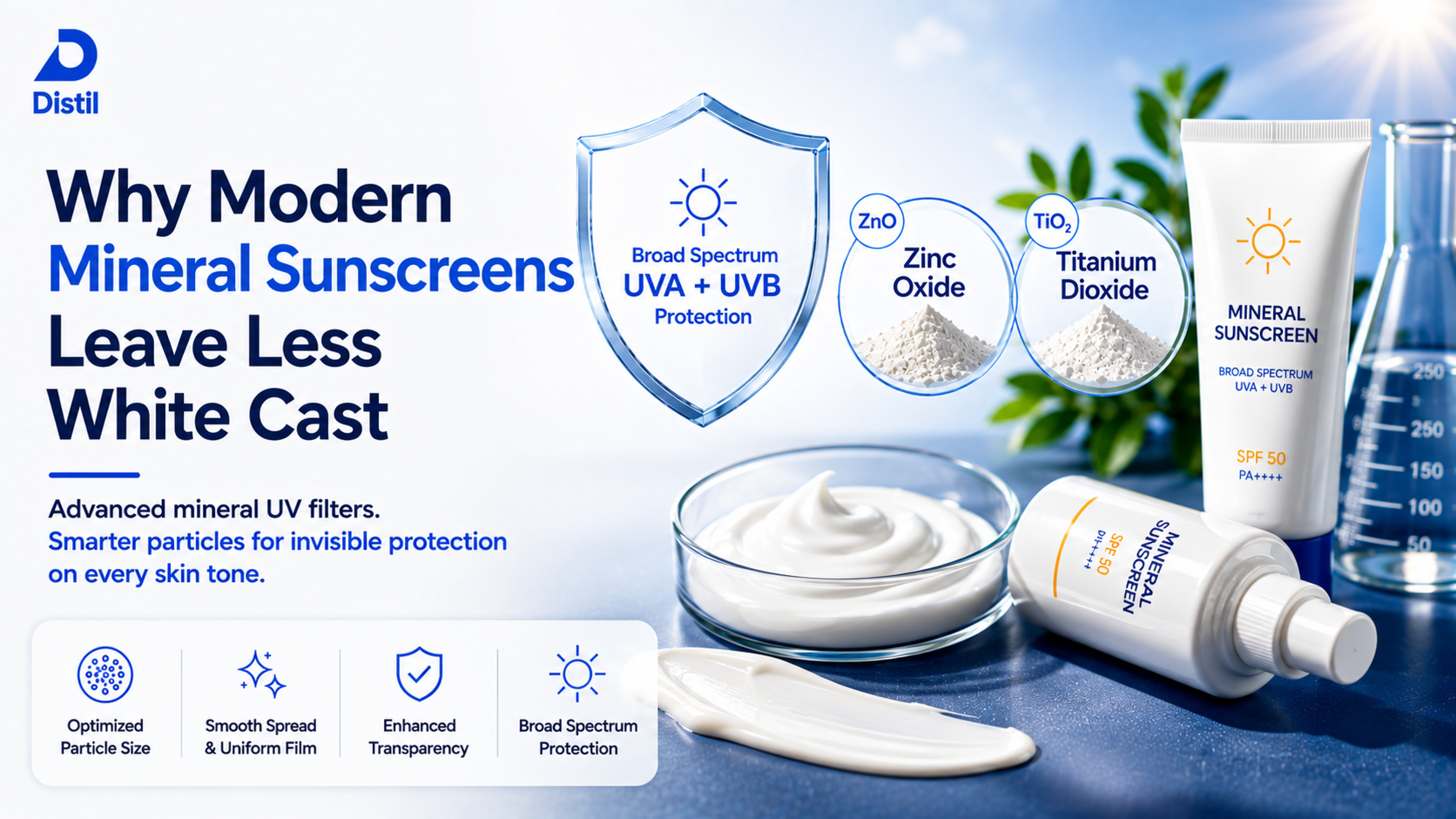
Advancements in particle engineering help reduce whitening effects, improve dispersion stability, and enhance transparency, resulting in more cosmetically elegant sunscreen formulations.
-
+
Its low irritation profile and inert nature make it suitable for pediatric formulations, post-procedure skincare, and daily-use sunscreen systems designed for sensitive skin.
-
+
Zinc Oxide provides broad-spectrum protection across both UVA and UVB ranges while functioning through both absorption and scattering mechanisms, making it highly effective in sunscreen systems.

READ MORE

READ MORE

READ MORE
READ MORE
READ MORE
READ MORE
READ MORE
READ MORE
READ MORE

READ MORE
.png)
We enable global brands to diversify production and accelerate sustainable sourcing while protecting IP.
Corporate Presentation
Follow us


© 2026 Distil. All rights reserved.


