
The cheapest ABS grade is not always the lowest-cost grade to run.
A lower resin price can look attractive during supplier evaluation, but the real cost depends on how the material performs on the production line. Differences in processing behaviour, drying requirements, consistency, appearance, dimensional stability, scrap and cycle time can quickly change the economics.
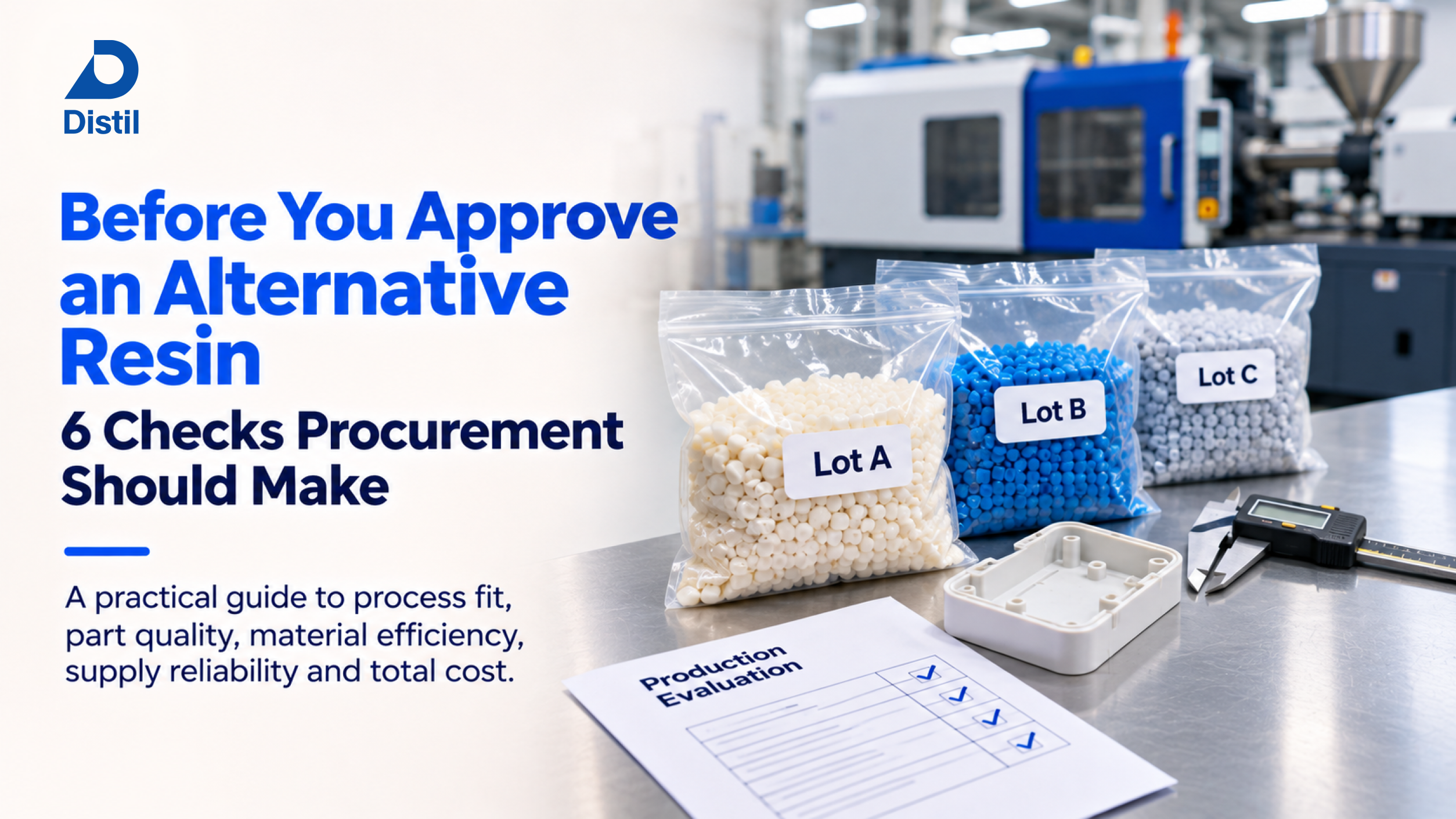
Before approving an alternative ABS grade, teams should evaluate process fit, technical data, lot-to-lot consistency, compliance, production performance and cost per accepted part.
The objective is simple: determine whether the alternative can reliably produce acceptable parts on the existing setup at a sensible total cost.
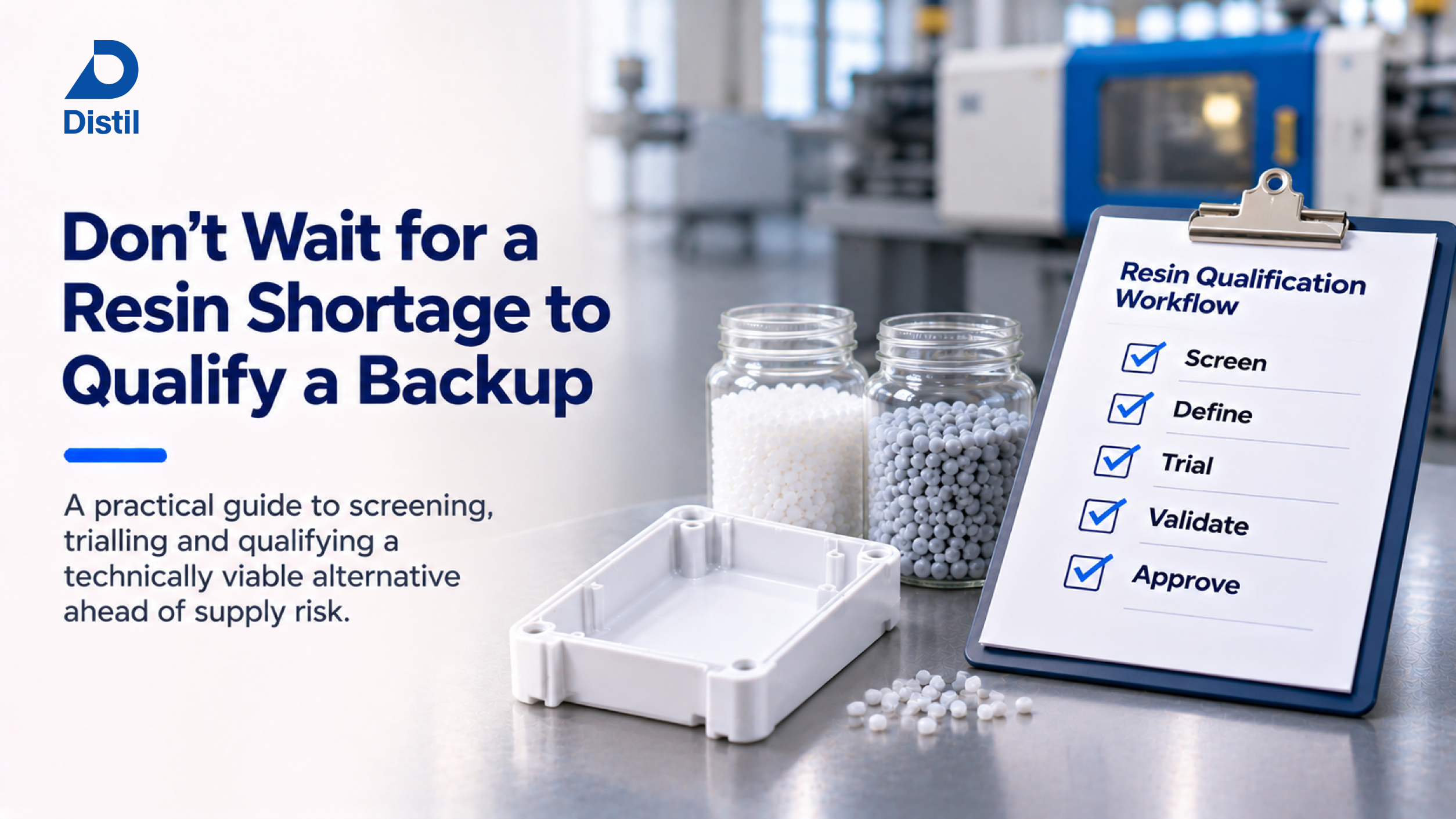
₹/kg is only one part of the purchasing decision. Before ordering trial material, screen the candidate grade against the incumbent using its TDS, multiple recent COAs and applicable compliance documentation. Confirm that the existing equipment can meet the candidate's specific drying and processing requirements. During the trial, use the same machine, mould and part where practical, define pass/fail criteria in advance, and record any process adjustments. Final approval should be based on process fit, consistency, compliance, production results and cost per accepted part—not resin price alone.
A lower resin price does not automatically mean lower manufacturing cost.
An alternative grade may require additional drying, longer cooling, different processing conditions or more process adjustments. If those changes increase cycle time, scrap, rework or rejected parts, the initial resin saving can disappear.
Instead of asking only:
"Which resin costs less per kilogram?"
ask:
"What does this grade cost to produce an accepted part?"
Consider the resin price alongside:
A useful comparison is cost per accepted part, not simply ₹/kg.
A resin described as a "drop-in" alternative may still require process adjustments. Before ordering a significant quantity, check whether the existing equipment and process can accommodate the candidate grade.
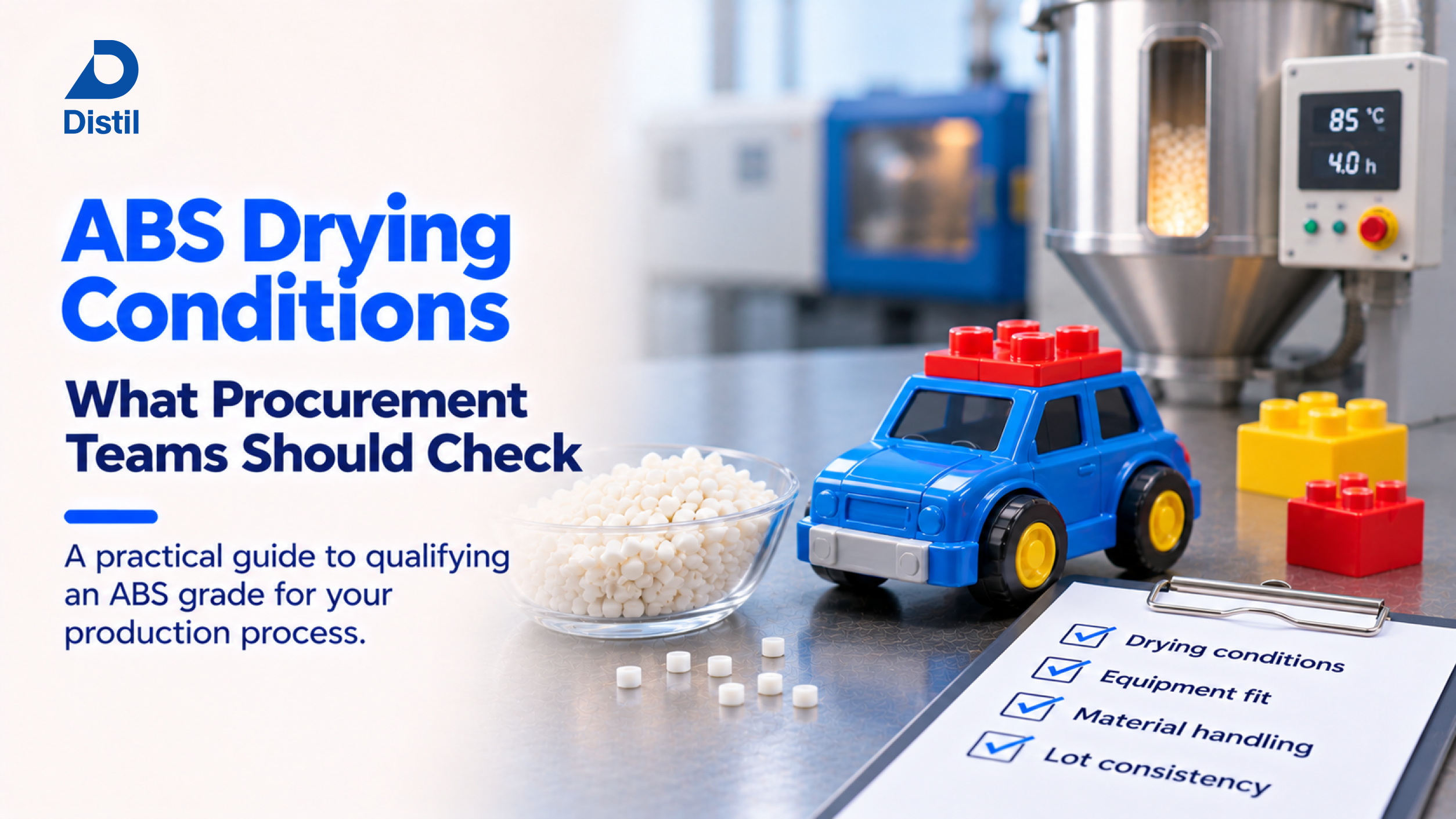
Confirm that the existing drying system can achieve the specific grade manufacturer's recommended drying temperature, time and moisture target under actual plant conditions.
Also check:
Do not assume that one drying recipe applies to all ABS grades.
Check shot size relative to barrel capacity. Very low shot-to-barrel ratios can increase material residence time, which may increase thermal history and create processing or colour risks if the material remains in the barrel too long.
Also review:
The objective is to confirm that the machine has enough operating margin for the candidate grade and part.
Confirm that the mould temperature system can maintain the grade's required temperature consistently across cavities.
Stable thermal control supports consistent:
Check whether the press can operate within a practical process window without relying on extreme settings.
The candidate should be capable of producing acceptable parts with reasonable control of:
A TDS is a screening tool, not a substitute for production validation.
Before starting a trial, review the properties relevant to the part and application, including where applicable:
Do not compare TDS values blindly. Make sure the values are measured using comparable test methods, temperatures, loads and specimen conditions before treating differences as meaningful.
A small difference in one headline property does not automatically mean the materials will behave differently—or similarly—in production.
One COA shows the characteristics of one lot. Multiple recent COAs provide a better view of consistency.
Where available, review 3–5 representative recent lots and compare the properties that are actually specified as quality-control or lot-release parameters for the grade.
These may include:
Do not assume that every supplier will report the same parameters on every COA.
For appearance-critical parts, colour consistency may deserve particular attention. For other applications, mechanical or thermal properties may be more important.
A trial is more useful when the team knows what constitutes a pass before the material reaches the machine.
Set measurable acceptance criteria for the application, such as:
This prevents the trial from becoming a subjective comparison based only on whether the parts "look good."
TDS values and COAs are screening tools—not substitutes for a controlled production trial.
Where practical, compare the alternative with the incumbent using the same machine, mould and part.
Before collecting evaluation parts:
Do not force the exact incumbent cycle if the alternative requires legitimate process adjustment. Instead, record the changes so the impact on production can be evaluated.
Track:
Process Performance
Part Quality
Production Performance
Where relevant, also verify application-specific properties such as stiffness, impact performance or other functional requirements.
Technical performance alone is not enough for final approval.
Verify the regulatory, customer and sector-specific requirements applicable to the finished part and its end use.
Depending on the application, this may include:
The required documentation should be checked before final supplier approval rather than after production has already shifted to the alternative grade.
A candidate ABS grade should not be approved simply because it produced acceptable parts during one short trial.
The final decision should consider five areas:
1. Process Fit
Can the existing equipment run the grade reliably?
2. Consistency
Does the supplier demonstrate stable quality across multiple lots?
3. Compliance
Does the material meet the requirements of the intended application?
4. Production Performance
Does it meet the defined cycle, quality, dimensional and scrap targets?
5. Economics
Does the material deliver a competitive cost per accepted part?
If the candidate meets these requirements, it has a stronger basis for approval than a grade selected purely on price.
Before approving an ABS alternative, confirm:
Because resin price does not capture the full manufacturing cost. A lower-priced grade can become more expensive if it increases cycle time, scrap, rework, drying requirements or quality rejects.
2. Is checking 3–5 COAs mandatory?
No. There is no universal requirement to review exactly 3–5 COAs. However, reviewing several recent representative lots—where available—is a useful way to assess lot-to-lot consistency before approval.
Treat the production trial as the key validation step, provided it was conducted under representative and controlled conditions. Differences in processing behaviour, shrinkage, thermal history, equipment fit or other grade-specific characteristics can appear on the production line even when TDS values look similar.
Start from the incumbent's established process as a baseline, but do not assume the candidate must run at identical settings. If adjustments are needed, record them and evaluate whether they affect cycle time, quality, scrap or production stability.
Multiple lots provide more information about consistency than a single sample. Depending on the grade, useful comparisons may include MFR/MFI, moisture, colour/YI, density and other supplier-specified quality parameters.
Confirm equipment and drying fit, review relevant TDS data, assess multi-lot consistency, verify required compliance, conduct a controlled production trial against defined acceptance criteria, and compare the resulting cost per accepted part.
Reach out to Distil for technically evaluated ABS alternatives, process-fit assessment and structured trial support.
Email: polymers@distil.market

READ MORE


READ MORE
READ MORE
READ MORE
READ MORE
READ MORE
READ MORE

READ MORE

READ MORE
READ MORE
READ MORE

READ MORE

READ MORE

READ MORE
READ MORE
READ MORE
READ MORE
READ MORE
READ MORE
READ MORE

READ MORE
READ MORE

READ MORE

READ MORE
READ MORE

READ MORE

We enable global brands to diversify production and accelerate sustainable sourcing while protecting IP.
Corporate Presentation
Follow us


© 2026 Distil. All rights reserved.


