
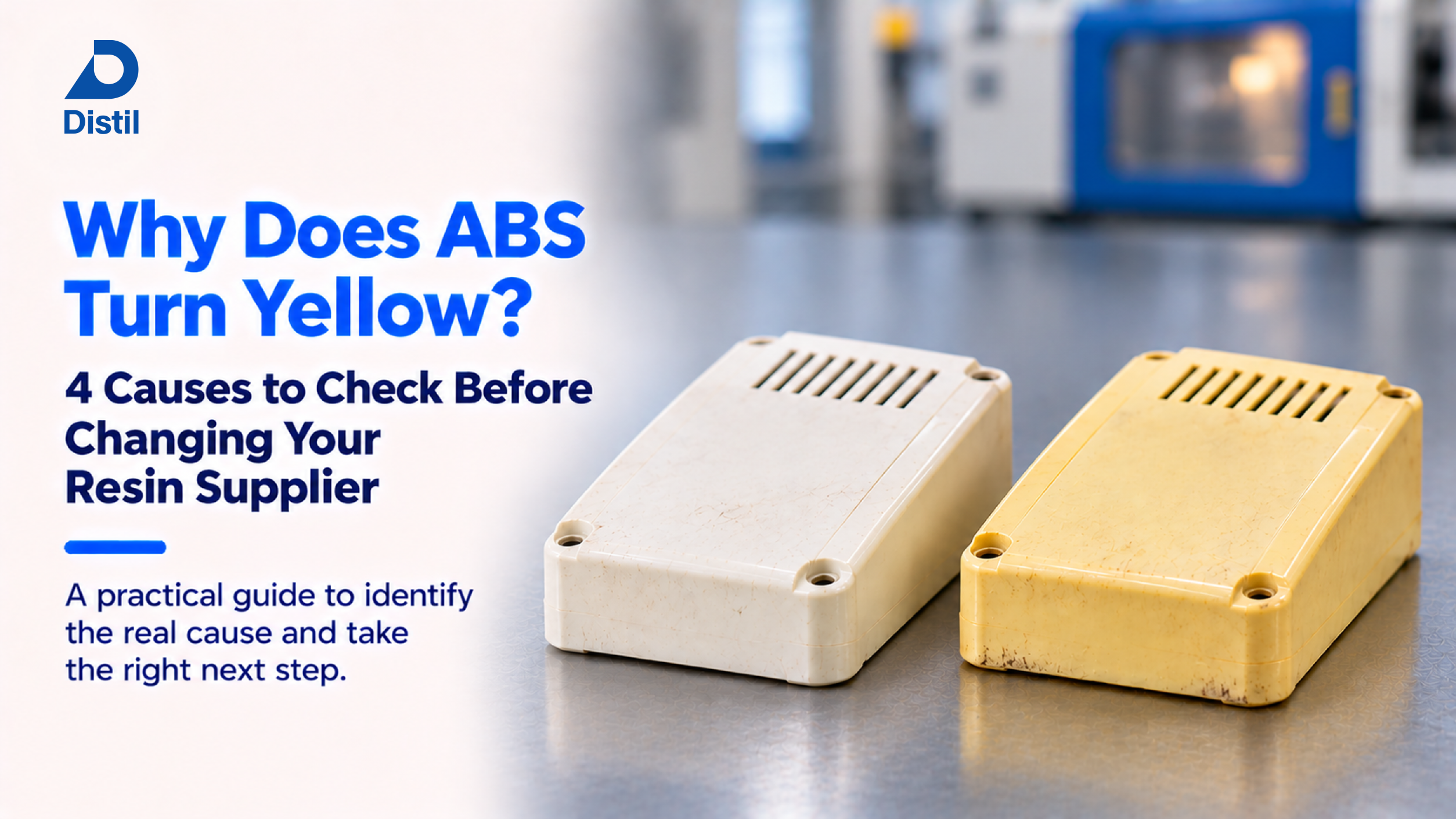
Yellowing in Acrylonitrile Butadiene Styrene (ABS) parts can be a frustrating issue in injection molding and extrusion. However, a colour shift does not automatically mean the resin is defective or that the supplier needs to be changed.
ABS contains a rubber phase, typically based on polybutadiene or a butadiene copolymer, dispersed within a styrene-acrylonitrile (SAN) matrix. This unsaturated rubber phase is susceptible to thermo-oxidative and photo-oxidative degradation, which can contribute to discoloration and changes in material performance.
The source of yellowing can be the material, processing conditions, storage or contamination. Before approving a new grade or changing suppliers, these factors should be checked systematically.
ABS yellowing can result from several factors beyond the resin itself, including excessive melt temperature, shear, long residence time, UV exposure, storage conditions, regrind history and contamination. A structured check of Material → Process → Storage → Contamination can help identify the actual cause before making a supplier change.
A single sample or first-article run is not enough to establish long-term colour consistency. Compare multiple production lots against an approved colour standard using measurements such as Yellowness Index (YI) or CIELAB colour difference (ΔE).
Also review the grade's stabilization package and confirm that it is appropriate for the intended processing and service conditions, particularly where significant UV exposure is expected.
Check batch certificates, melt-flow consistency and supplier specifications to determine whether colour variation correlates with a particular lot.
Processing outside the recommended thermal and shear window can increase the risk of ABS discoloration.
Do not rely only on barrel heater setpoints. Where possible, verify the actual melt temperature because localized overheating can occur even when machine settings appear normal.
High screw speed, excessive back pressure and restrictive flow paths can increase shear heating. Long residence times can also expose the polymer to elevated temperatures for longer than intended.
Pay particular attention to:
Moisture in ABS is more commonly associated with defects such as splay and silver streaks. However, drying conditions should still be controlled.
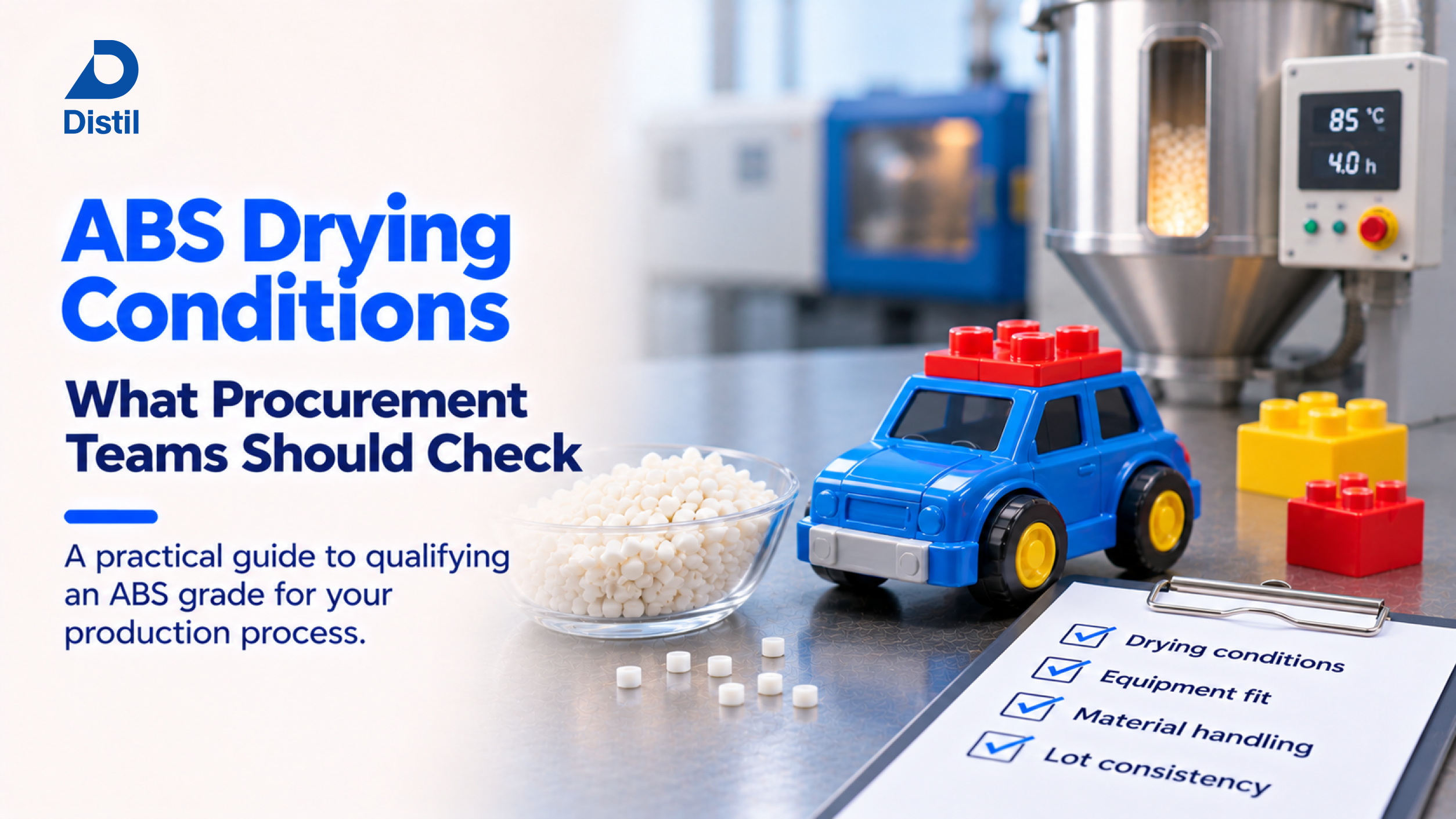
Follow the grade-specific drying temperature and time recommended by the supplier. Excessive drying temperature or unnecessarily long exposure can contribute to thermal aging.
The material's history before it reaches the machine can also matter.
Prolonged exposure to sunlight or significant UV radiation can accelerate photo-oxidation and discoloration in ABS.
Storage in hot areas can also raise pellet temperature and increase the risk of material aging.
Check bags, liners and containers for tears, open seals, moisture exposure or contamination.
If a colour issue is associated with a particular lot, review when and where that material was stored and whether the packaging remained intact.
Not every colour shift originates from virgin resin. Material can also become discoloured within the processing system.
Degraded polymer can accumulate in dead spots, nozzles, hot runners or other areas where material remains exposed to elevated temperatures.
Inspect the machine for material hang-up, previous polymer carryover and purge residues.
Regrind carries previous thermal and shear history. Repeated processing can increase the risk of degradation, particularly when temperatures or residence times are excessive.
Check whether high regrind levels, repeated reprocessing or contaminated regrind are contributing to the colour shift.
Small amounts of previous polymers, colourants or purge compounds can affect natural, white or light-coloured ABS.
This is particularly important after material or colour changeovers.
When yellowing appears unexpectedly, avoid immediately changing the resin supplier. Instead:
1. Check the machine: Verify actual melt temperature, screw speed, back pressure, residence time and possible material hang-up.
2. Compare virgin and regrind: Run fresh virgin resin from a sealed lot against the current regrind blend under controlled conditions.
3. Check storage history: Review storage temperature, UV exposure and packaging condition.
4. Compare with a reference lot: Process an approved material lot under the same conditions and compare the resulting parts.
5. Investigate the supplier: If process, storage and contamination checks are satisfactory and colour drift continues across multiple lots, evaluate the material and consider an alternative grade through a controlled trial.
Before approving a new ABS grade or supplier, procurement and technical teams should ask:
These questions help procurement evaluate more than price and datasheet values when qualifying an alternative ABS grade.
No. Resin formulation or lot variation can contribute to colour differences, but processing temperature, shear, residence time, regrind, UV exposure and contamination can also contribute to discoloration.
Regrind carries previous thermal and shear history. Repeated processing can increase the risk of degradation and may affect colour and mechanical properties, particularly when processing conditions are aggressive.
Residual polymer, degraded material, previous colour compounds or purge residues can remain in dead spots and later enter the melt stream. This can cause discoloration even when the current resin lot is consistent.
Drying problems are more commonly associated with moisture-related defects such as splay and silver streaks. However, excessive drying temperature or prolonged exposure can contribute to thermal aging, so drying conditions should remain within the grade-specific recommendation.
Talk to Distil for technically evaluated ABS alternatives and structured trial support to help assess material fit before switching suppliers.
For formulation details, reach out to polymers@distil.market
READ MORE


READ MORE
READ MORE
READ MORE
READ MORE
READ MORE
READ MORE
READ MORE
READ MORE
READ MORE
READ MORE
READ MORE

READ MORE
READ MORE
READ MORE
READ MORE
READ MORE
READ MORE
READ MORE
READ MORE
READ MORE
READ MORE
READ MORE
READ MORE
READ MORE

READ MORE

We enable global brands to diversify production and accelerate sustainable sourcing while protecting IP.
Corporate Presentation
Follow us


© 2026 Distil. All rights reserved.


